

 English
 Français
 Deutsch
 Русский
 Español
 Português
 عربي
عربي Tiếng Việt
 Indonesia
 हिन्दी
Serving the world
Phone : +86 -18005440164
Phone : +86 -15621270096
Whatsapp : +86 -18005440164
Whatsapp : +86 -15621270096
Email : luna@nuokungeo.com
Email : jone@nuokungeo.com
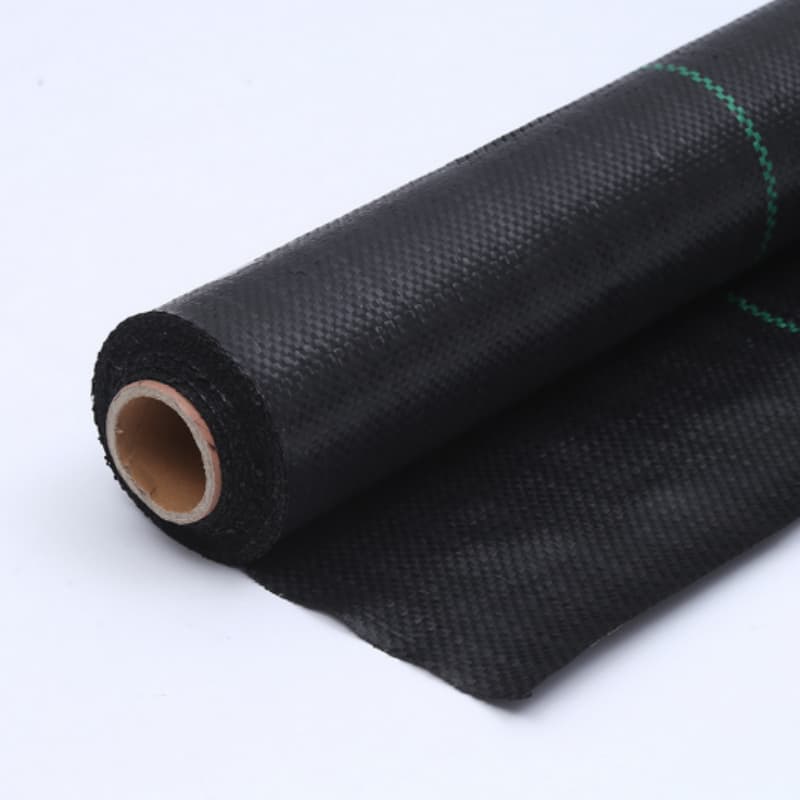
Weed Barrier Installation Guide | 5oz Nonwoven Fabric | Backyard Slope & Pathway
We’ve gathered the most common questions from hundreds of home gardeners. Drawing on real-world installation experience, we’re giving you straight answers to help you get your backyard slope right the first time.
Q1: Can weed barrier fabric completely stop weeds?
A: Yes, it can suppress nearly 100% of weeds germinating trying to grow from the soil below. High-quality fabric simply blocks the sunlight they need to survive. But here’s a quick heads-up: You might still see some weeds sprouting on top of the fabric. This usually happens when wind or birds drop seeds into the mulch or gravel above. Don't worry, the fabric is still doing its job perfectly!
Q2: Should I choose woven or nonwoven weed barrier fabric?
A: It really depends on where you're using it. For most home gardens, needle-punched nonwoven weed barrier fabric is versatile economical , and offers a great balance of permeability, root resistance, and adequate strength. Woven weed barrier fabric offers higher strength and is better suited for high-load areas like driveways, under parking areas, or on steep slopes.
Q3: Can water still seep through after laying the fabric?
A: Absolutely,as long as you choose a highly permeable fabric. Our 5oz nonwoven landscape fabric has a vertical permeability rate > 20 l/m²/s, meaning even during heavy rain, water can infiltrate quickly without causing surface ponding or runoff.
Q4: How to properly secure it, especially on a slope?
A: Proper anchoring is crucial for success. You must use "U"-shaped landscape fabric staples, regular tent pegs won't hold up. On flat ground, secure every 1-1.5 meters. On a slope, spacing should be tighter at 0.5-1 meter. Start installation from the top of the slope, and orient the roll perpendicular to the slope direction (short side up/down), with upper sheets overlapping lower ones like roof shingles.
Q5: How long does weed barrier fabric last?
A: Lifespan heavily depends on the UV stabilizer content. While cheap products can become brittle in 1-2 years, our fabric is formulated with ≥2% carbon black for maximum UV resistance. This provides a reliable service life of 5-8 years in temperate climates. When it's time to replace it, the material gradually fragments, eliminating the frustrating task of peeling off torn pieces.
Q6: Can I put soil directly on top of the fabric to plant flowers?
A: Please avoid doing this! You should always apply at least 5-7 cm of inorganic mulch (like gravel, lava rock, or pine bark) on top of the fabric. If you use regular soil, it will quickly clog the fabric's pores, ruin its permeability, and ironically, turn into a perfect breeding ground for weeds.
Q7: How to install around trees or shrubs?
A: Cut an "X" or "Y" shape centered on the trunk, drape the fabric over, then overlap and staple the cut edges. Crucially, leave a fabric-free zone of at least 15-20 cm in diameter around the trunk, covered with mulch, to prevent bark abrasion and allow for root respiration.
Q8: Do I need to remove it in winter? Will freeze-thaw cycles damage it?
A: No, removal is unnecessary. Premium weed barrier fabric features superior weatherability and structural flexibility, allowing it to absorb the stress of freeze-thaw cycles without degrading. Keeping it installed also provides the added benefit of preventing winter weed germination and spring soil erosion.
Q9: Is it environmentally friendly?
A: Yes, from a lifecycle perspective. It significantly reduces herbicide runoff and soil erosion, while its long service life minimizes overall waste. Furthermore, our products are manufactured using virgin polypropylene, are free of heavy metals, and are recyclable at the end of their lifespan.
Q10: Where do most installation mistakes happen?
A: In our experience, it usually comes down to two common errors:
1)Skipping the base prep: If you leave sharp stones or roots underneath, they will eventually puncture the fabric from below. Always start with a smooth, clear base!
2)Leaving it exposed to the sun: UV rays are the enemy of any landscape fabric. Never leave it bare for too long.
The Golden Rule: Just remember this simple sequence: Clear → Level → Lay & Secure → Cover Immediately!
leave a message
Scan to Wechat/Whatsapp :




 IPv6 network supported