leave a message
If you are interested in our products and want to know more details,please leave a message here,we will reply you as soon as we can.
As a professional waterproofing welder manufacturer, Nuokun Geo specializes in the production of geomembrane welding machines developed for stable performance, precise operation, and long-term durability.
This video provides a closer look at the machine’s overall structure, control system, heating unit, driving mechanism, pressure rollers, and welding operation. It also demonstrates the equipment’s quality inspection process before shipment. With stable temperature control and adjustable welding speed, the machine is designed to produce consistent and uniform seams when operated with suitable membrane materials and properly selected welding parameters.
Beyond the machine itself, the video also presents Nuokun Geo’s packaging and accessory preparation process. Each unit is carefully checked before packing, while protective materials and customized export crates are used to reduce the risk of impact, moisture, and movement during transportation.
From equipment manufacturing and quality inspection to final packaging and delivery, Nuokun Geo focuses on every stage of the process. We provide reliable welding equipment and practical technical support for customers involved in waterproofing and geosynthetic engineering projects worldwide.
🎥 Watch the video:
Product Overview
The waterproofing welder is a professional heat-welding machine designed for joining compatible waterproofing membranes and thermoplastic sheets. It creates a continuous welded seam by applying controlled heat and pressure to the overlapping membrane layers.
For geomembrane and waterproofing applications, seam quality is just as important as the membrane itself. A properly selected welding machine helps maintain stable temperature, consistent welding speed, and uniform pressure throughout the welding process.
The machine is suitable for a wide range of waterproofing and containment projects, including geomembrane lining, pond construction, landfill systems, wastewater facilities, reservoirs, and other applications where continuous membrane seams are required.
Its compact structure and integrated operating system make the equipment convenient for transportation, positioning, and on-site operation. Depending on the model and configuration, the machine can be supplied with different voltage and welding parameters to meet project requirements
Machine Design & Appearance
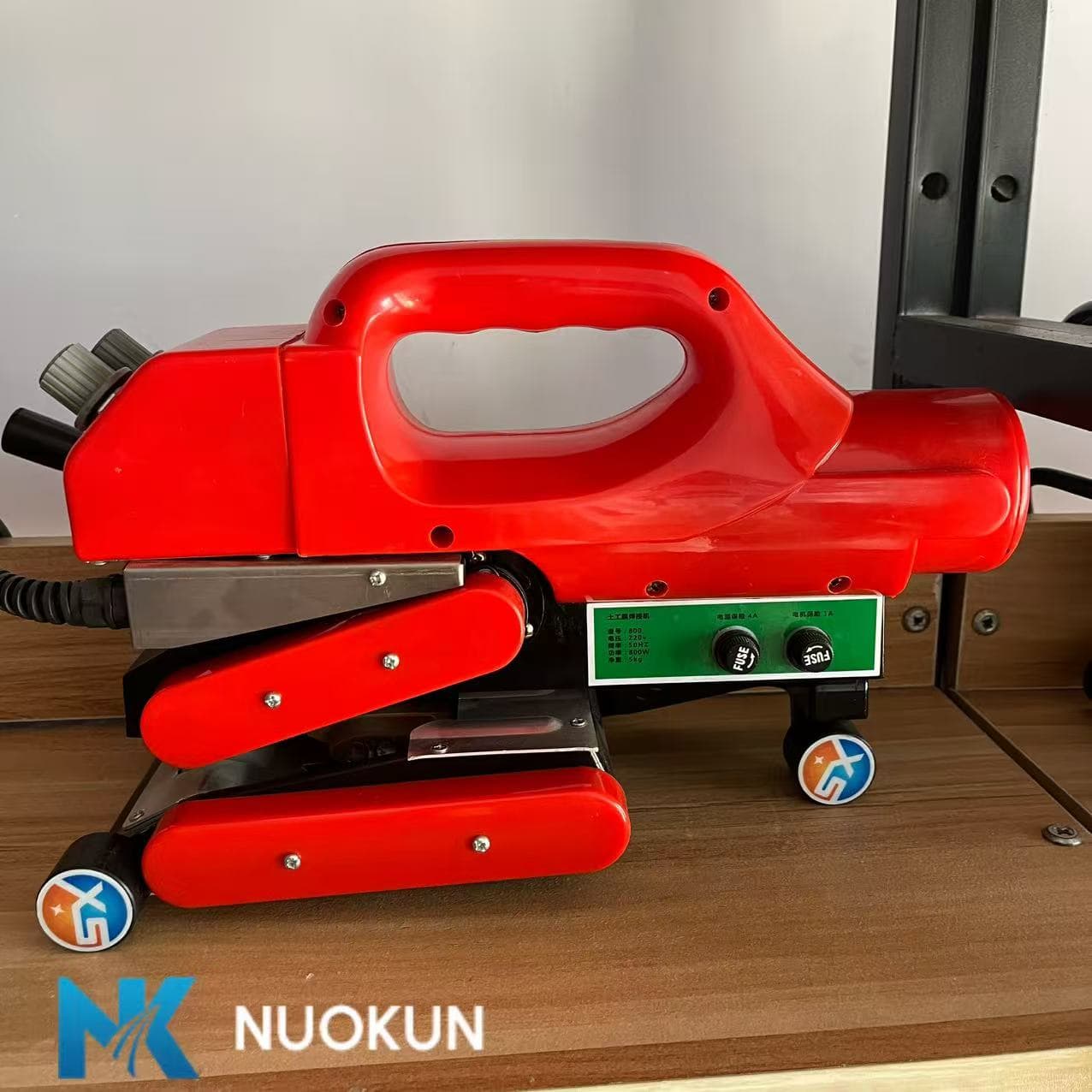
The waterproofing welder features a compact and practical design developed for on-site membrane welding. The main components are arranged around the heating, driving, pressure, and control systems, allowing operators to access the key functions during welding.
The machine body is designed to provide a stable working position while keeping the overall equipment manageable for transportation and installation. The operating handle provides direct control during positioning and welding, while the drive mechanism helps maintain a consistent movement speed along the membrane seam.
The control area is positioned for convenient adjustment of key welding parameters. Depending on the machine configuration, operators can adjust the welding temperature and travel speed according to the membrane material, thickness, ambient conditions, and welding requirements.
The heating and pressure components are located close to the welding seam, helping the machine apply heat and pressure directly to the membrane overlap. This structure supports continuous welding and helps reduce interruptions during long straight seams.
Before shipment, the appearance, operating components, power connections, and major mechanical parts are checked to ensure the equipment is ready for delivery.
Welding Performance
Stable welding performance is one of the most important factors when selecting a waterproofing welder. The machine is designed to provide controlled heating, consistent travel speed, and continuous pressure during the welding process.
Stable Heating
The heating system provides controlled heat to soften the contact surfaces of compatible thermoplastic membranes. Proper temperature adjustment is important because excessive heat may damage the membrane, while insufficient heat may result in incomplete fusion.
Operators can select an appropriate temperature according to the membrane type, thickness, ambient temperature, and actual welding conditions.
Adjustable Welding Speed
Different membrane materials and thicknesses may require different welding speeds. The adjustable drive system allows operators to control the travel speed and coordinate it with the selected welding temperature.
This helps maintain a more consistent welding condition along the entire seam rather than relying only on manual movement.
Continuous Seam Welding
The machine is designed for continuous welding of overlapping membrane sheets. This is particularly useful for large projects where long, straight seams need to be completed efficiently.
Compared with manual welding methods, an automatic or semi-automatic welding machine can reduce operator fatigue and help improve consistency during extended welding operations.
Consistent Pressure
During welding, the pressure rollers help maintain contact between the membrane layers while the heating system softens the welding surfaces. Stable pressure is necessary for proper fusion and a continuous seam structure.
The actual welding parameters should always be confirmed through trial welding before formal production welding begins.
Control Panel & Operation
The control system allows operators to manage the main welding parameters during operation. Depending on the specific model, the control panel may include temperature adjustment, travel-speed control, power control, and other operating functions.
Before starting formal welding, the operator should check the power supply, membrane overlap, welding surface, machine condition, and selected parameters.
A typical operating sequence includes:
① Check the Machine
Inspect the power cable, heating system, pressure rollers, drive mechanism, and other components before operation.
② Prepare the Membrane
Make sure the overlap area is clean, dry, aligned, and free from dust, moisture, oil, or other contaminants.
③ Set the Welding Parameters
Select the appropriate heating temperature and travel speed according to the membrane material, thickness, and site conditions.
④ Perform a Trial Weld
A test weld should be completed before formal welding. The trial seam can be visually inspected and tested to confirm that the selected parameters are suitable.
⑤ Start Continuous Welding
After confirming the trial results, position the machine on the overlap and begin continuous welding while monitoring the seam and machine operation.
⑥ Inspect the Finished Seam
After welding, inspect the seam for wrinkles, gaps, incomplete fusion, overheating, or other visible defects. Appropriate non-destructive or destructive testing can be performed according to project requirements.
Following a consistent operating procedure helps reduce avoidable welding problems and supports more stable seam quality.
Key Applications
The waterproofing welder can be used for compatible thermoplastic membranes in a variety of waterproofing, containment, and environmental engineering applications.
HDPE Geomembrane
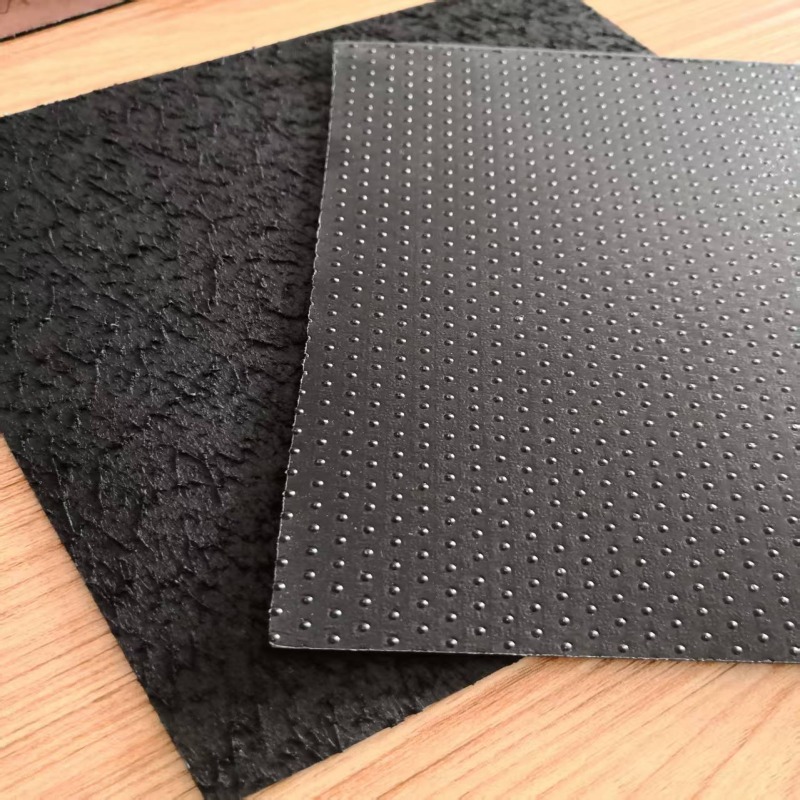
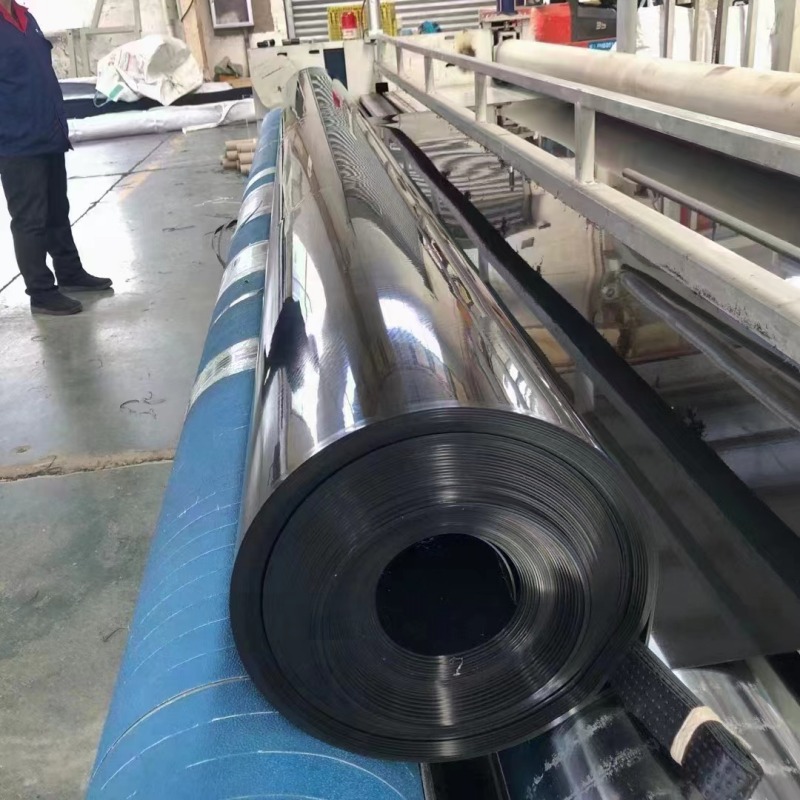
HDPE geomembranes are widely used for landfill liners, aquaculture ponds, wastewater treatment facilities, reservoirs, tailings ponds, and other containment systems. The welding machine can be used to join overlapping HDPE membrane sheets and create continuous seams.
Aquaculture Pond Liners
For fish and shrimp farming ponds, reliable membrane seams are essential for maintaining the integrity of the pond lining system. The welding machine can be used for pond bottom and side-wall membrane installation, subject to suitable machine configuration and welding parameters.
Landfill & Waste Containment
Geomembrane liners are commonly incorporated into landfill and waste containment systems. Long membrane seams require controlled and repeatable welding to support the overall containment structure.
Wastewater & Water Storage
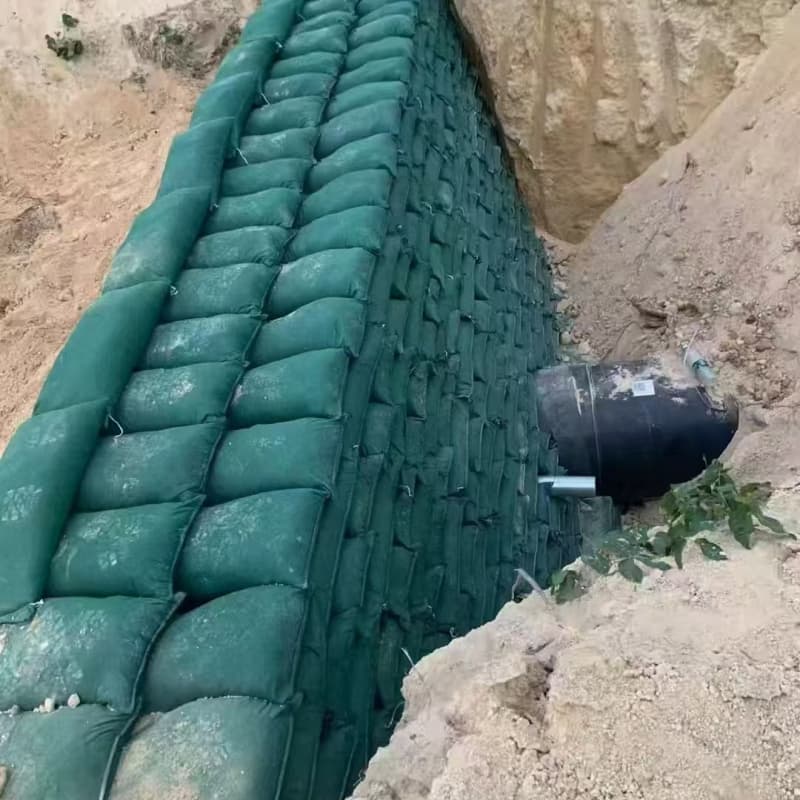
The equipment can also be used in compatible membrane systems for wastewater treatment tanks, water storage facilities, reservoirs, artificial lakes, and related projects where waterproofing and seepage control are required.
General Waterproofing Projects
Depending on the machine model and compatible membrane materials, the equipment may also be used for various thermoplastic waterproofing applications. Material compatibility, membrane thickness, temperature range, and welding requirements should be confirmed before use.
For every project, welding parameters should be established through a proper trial weld before full-scale installation. This helps ensure that the selected equipment and settings are appropriate for the actual membrane and site conditions.
Accessories & Components
A waterproofing welder is more than the main machine itself. The supporting accessories and components also play an important role in daily operation, maintenance, and transportation. NUOKUNGEO prepares the corresponding accessories according to the machine model and customer requirements.
Welding Machine
The main unit integrates the heating, driving, pressure, and control systems required for continuous membrane welding. Before shipment, the machine is checked for basic operation and appearance to ensure that the main components are in suitable condition.
Heating Wedge
The heating wedge is one of the key components of a hot-wedge welding machine. It provides controlled heat to the overlapping membrane surfaces before pressure is applied. The heating element should be kept clean and protected from damage during transportation and storage.
Pressure Rollers
Pressure rollers maintain contact between the membrane layers after heating. Proper pressure helps the softened membrane surfaces fuse together and form a continuous welded seam.
Power Cable & Electrical Components
The machine is supplied with the required power cable and electrical components according to the selected configuration. Voltage and frequency requirements should be confirmed before ordering to ensure compatibility with the customer’s working environment.
Tools & Spare Parts
Depending on the machine model, standard tools and selected spare parts may be supplied for routine adjustment and maintenance. Customers can also request additional replacement components for long-term operation.
Operation Manual
An operation manual can be provided to help users understand basic machine functions, parameter adjustment, operation procedures, maintenance requirements, and safety precautions.
Customized Accessories
For different projects and markets, NUOKUNGEO can discuss customized configurations, spare parts, power requirements, packaging methods, and other equipment details with customers before production.
The final accessory list depends on the selected machine model and configuration. We recommend confirming the complete equipment list before shipment.
FAQ
Q1: What materials can the waterproofing welder be used for?
The machine is designed for compatible thermoplastic waterproofing membranes and geomembranes. Common applications include HDPE geomembranes and other materials supported by the specific machine configuration. Material type and thickness should be confirmed before welding to determine suitable temperature and speed settings.
Q2: Can the welding temperature and speed be adjusted?
Yes. The machine is designed with adjustable welding parameters, allowing operators to select suitable temperature and travel speed according to membrane material, thickness, ambient conditions, and actual welding performance. A trial weld should always be performed before formal installation.
leave a message
Scan to Wechat/Whatsapp :



 English
 Français
 Deutsch
 Русский
 Español
 Português
 عربي
عربي Tiếng Việt
 Indonesia
 हिन्दी



 IPv6 network supported