
leave a message
If you are interested in our products and want to know more details,please leave a message here,we will reply you as soon as we can.
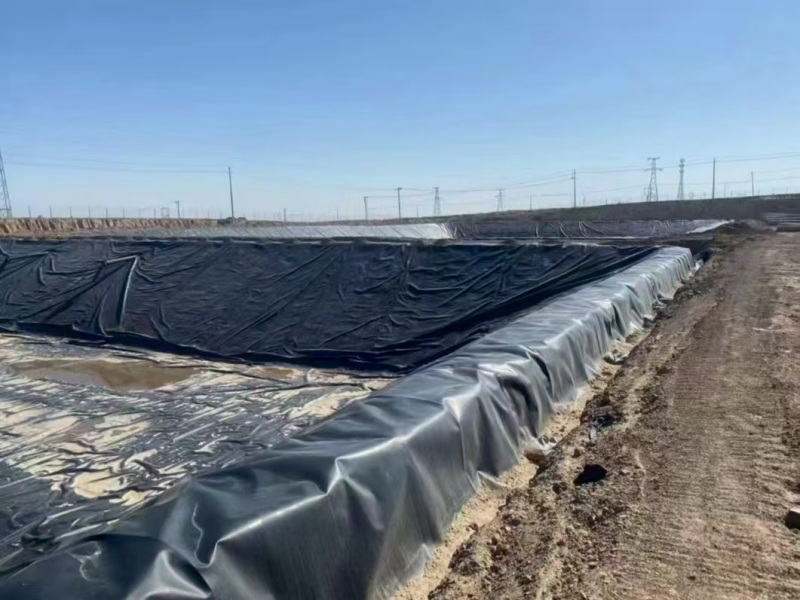
Environmental engineering projects such as landfills, mining ponds, and wastewater containment systems all face the same core problem: controlling leakage over long periods of time.
Once leachate or contaminated water enters the soil system, remediation becomes extremely difficult and expensive. In many cases, the damage is irreversible.
This is why most modern projects now rely on geosynthetic systems instead of traditional compacted clay liners alone.
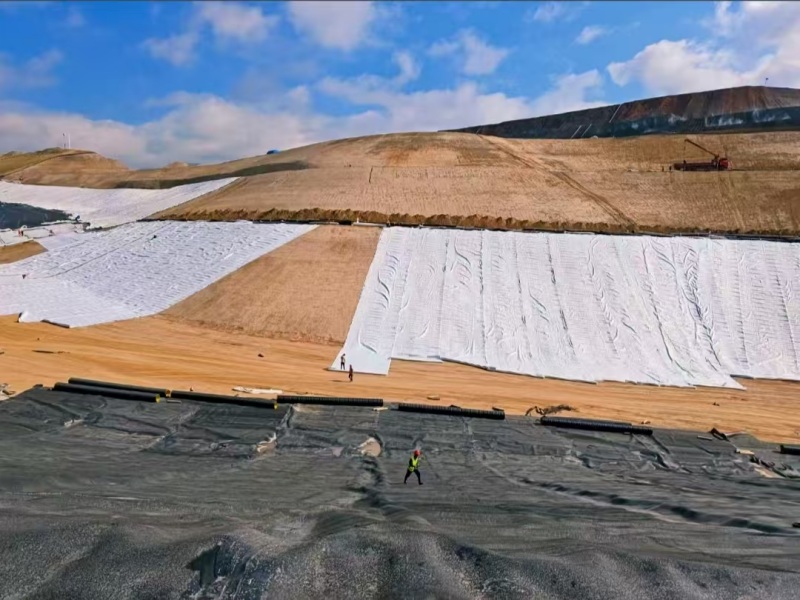
Common systems include:
• HDPE geomembrane as the primary barrier
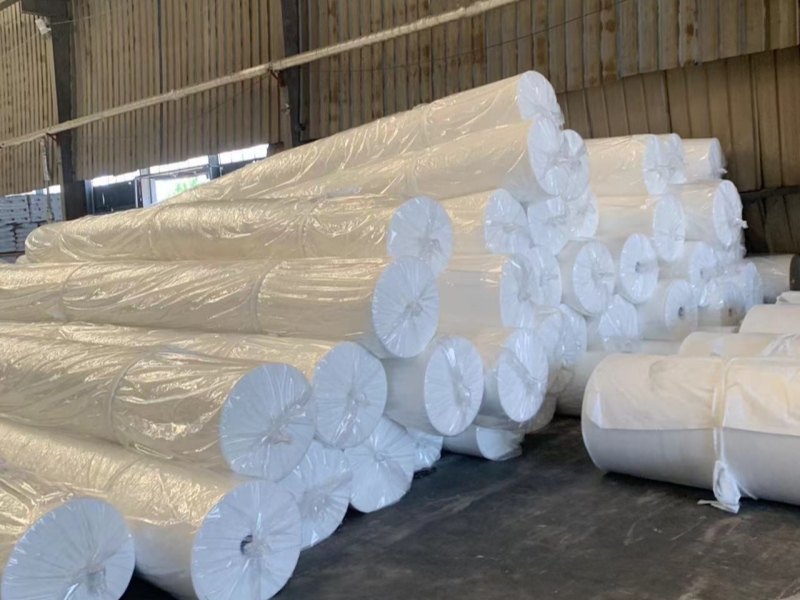
• nonwoven geotextile for protection and filtration
• GCL (geosynthetic clay liner) for secondary sealing
Role of HDPE Geomembrane in Containment Systems
HDPE geomembrane is widely used because it provides consistently low permeability and strong chemical resistance against landfill leachate and industrial wastewater.
However, in real engineering applications, long-term performance is not determined by the material alone.
Most field issues come from:
• subgrade preparation quality
• welding consistency
• installation temperature conditions
• interface friction on slopes
For example, in landfill slope systems, even when HDPE geomembrane meets all laboratory standards, poor interface friction between layers can still lead to gradual liner movement under heavy rainfall conditions.
That is why textured geomembrane is now commonly specified for slope areas instead of smooth sheets
Geotextile in Ground and Drainage Control
In road and ground engineering projects, geotextile plays a different but equally important role.
It is mainly used for:
• soil separation
• filtration control
• drainage improvement
• load distribution over weak subgrade
In soft soil regions, failure often begins with water accumulation inside the subgrade. Without proper filtration layers, soil strength gradually decreases, leading to settlement and cracking over time.




S
leave a message
Scan to Wechat/Whatsapp :



 English
 Français
 Deutsch
 Русский
 Español
 Português
 عربي
عربي Tiếng Việt
 Indonesia
 हिन्दी


 IPv6 network supported