
leave a message
If you are interested in our products and want to know more details,please leave a message here,we will reply you as soon as we can.

The geomembrane welding rod is a thermoplastic filler material designed for extrusion welding, seam reinforcement, and localized repairs of polyethylene geomembranes. It is commonly used with a geomembrane extrusion welding machine to create strong, continuous, and watertight connections.
Available in compatible HDPE, LLDPE, and PE formulations, these welding rods are selected to meet the base geomembrane material. During installation, the rod is heated and melted inside the extrusion welder, then deposited onto the prepared welding area. After cooling, the fused material forms a continuous bond with the geomembrane.
Color :
BlackWeight :
5kgLead Time :
7days after deposit paymentOrder(MOQ) :
5RollsPayment :
FOB (Can communicate and negotiate)Product Origin :
ChinaShipping Port :
Qingdao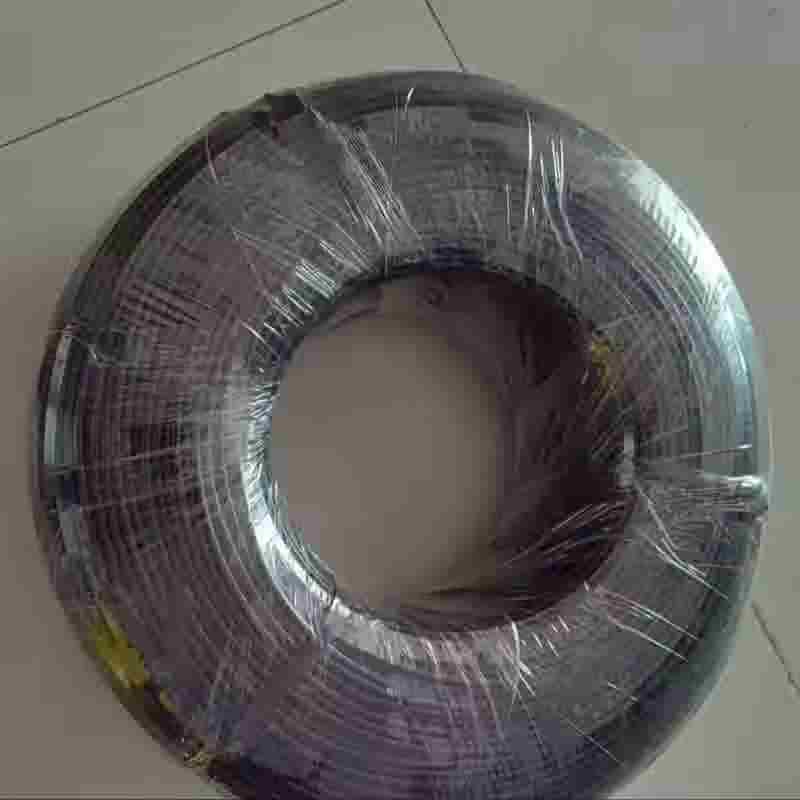
Welding Rods
A geomembrane welding rod is a solid thermoplastic filler rod used in extrusion welding to join, seal, or repair geomembrane surfaces. Unlike double-track hot wedge welding, which is mainly used for long, straight seams, extrusion welding is particularly suitable for detailed areas, irregular joints, pipe penetrations, T-joints, corners, and patch repairs.
The welding rod must be compatible with the geomembrane’s polymer type and formulation to achieve reliable fusion and maintain the waterproofing performance of the lining system.
1. HDPE Welding Rod
HDPE welding rods are primarily designed for high-density polyethylene geomembranes. They offer good chemical resistance, durability, and mechanical strength.
Typical applications:
Landfill base and cap lining systems
Industrial wastewater containment
Mining tailings and leachate ponds
Chemical storage and containment facilities
Reservoir and artificial pond lining
2. LLDPE Welding Rod
LLDPE welding rods are designed for linear low-density polyethylene geomembranes. Their compatibility with flexible liner materials makes them suitable for applications requiring greater elongation and flexibility.
Typical applications:
Agricultural irrigation reservoirs
Fish ponds and aquaculture facilities
Water storage basins
Flexible containment systems
Geomembrane patch repairs
3. PE Welding Rod
PE welding rods are used with corresponding low-density polyethylene geomembranes. They are suitable for flexible liner systems and detailed welding work where material compatibility is essential.
Typical applications:
Flexible water containment liners
Agricultural ponds
Localized geomembrane repairs
Pipe and penetration sealing
Detailed construction joints
1. Reliable Fusion Bonding
When the welding rod and base geomembrane are compatible and correctly welded, the molten material fuses with the liner to create a continuous joint.
2. Suitable for Detailed Welding
Extrusion welding allows operators to work on corners, T-joints, pipe connections, and other areas that are difficult to access with automatic welding equipment.
3. Good Chemical Resistance
PE welding rods provide chemical resistance consistent with their corresponding polymer materials, making them suitable for many containment and environmental protection projects.
4. Convenient Packaging
The 5kg package is easy to handle, transport, and distribute among installation teams. It is suitable for routine construction and localized repair work.
6. Multiple Material Options
HDPE, LLDPE, and PE options allow contractors to select the appropriate welding rod for different geomembrane systems.
Step 1: Prepare the Welding Surface
Clean the welding area and remove dust, oil, moisture, mud, and other contaminants. The geomembrane surface should be dry and suitable for welding.
Step 2: Prepare the Welding Rod
Check that the welding rod matches the base geomembrane material. Keep the rods clean and dry before use. Do not use rods contaminated with oil, dirt, or moisture.
Step 3: Prepare the Geomembrane
Trim loose or damaged edges where necessary. For repair work, prepare a compatible geomembrane patch with sufficient overlap around the damaged area.
Step 4: Preheat the Base Material
Use the extrusion welding machine’s hot-air system to preheat the geomembrane surface. The preheating temperature and welding conditions should be adjusted according to the material, equipment, and site environment.
Step 5: Extrusion Welding
Feed the welding rod into the extrusion welder. The machine melts and extrudes the material onto the prepared welding area. Use the appropriate pressure and welding speed to ensure consistent contact and fusion.
Step 6: Allow the Weld to Cool
Allow the weld to cool naturally before inspection. Avoid pulling, bending, or stressing the welded area while it is still hot.
Step 7: Inspect the Weld
Check the finished weld for visible defects, incomplete fusion, pores, and discontinuities. Conduct appropriate non-destructive or destructive testing according to the project specifications.
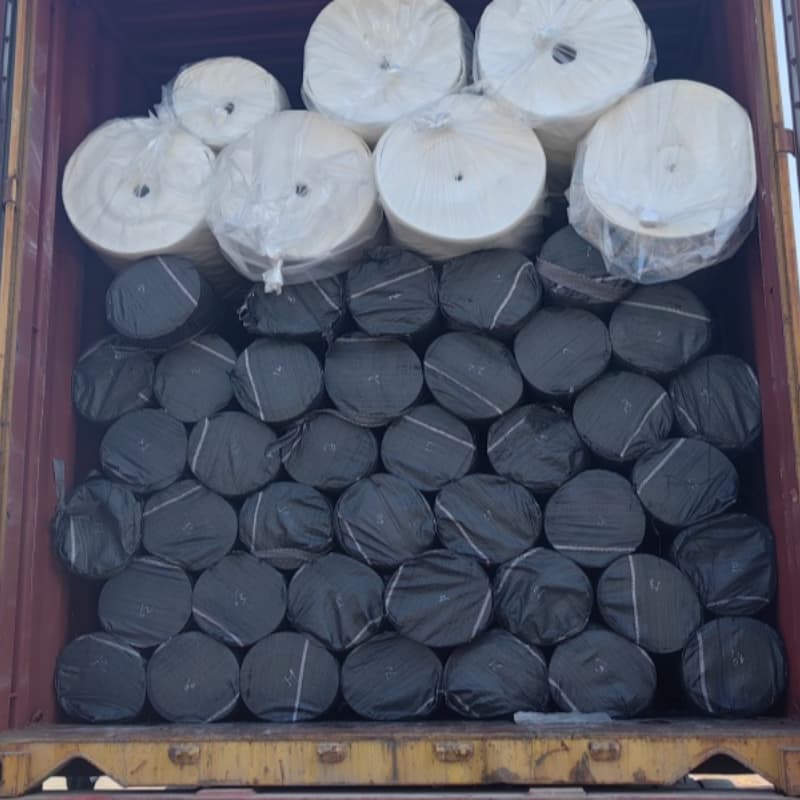
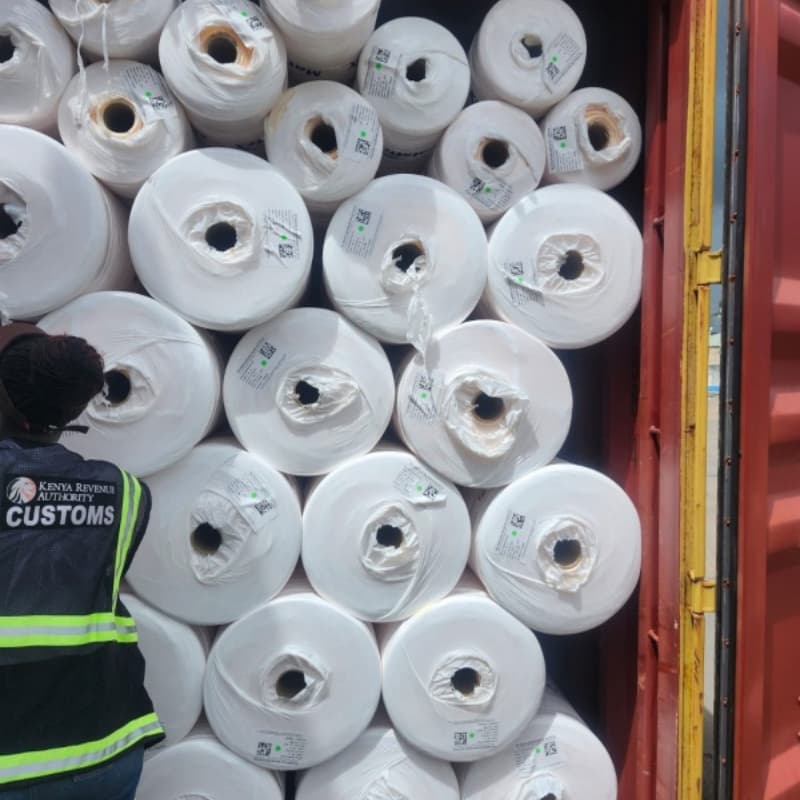
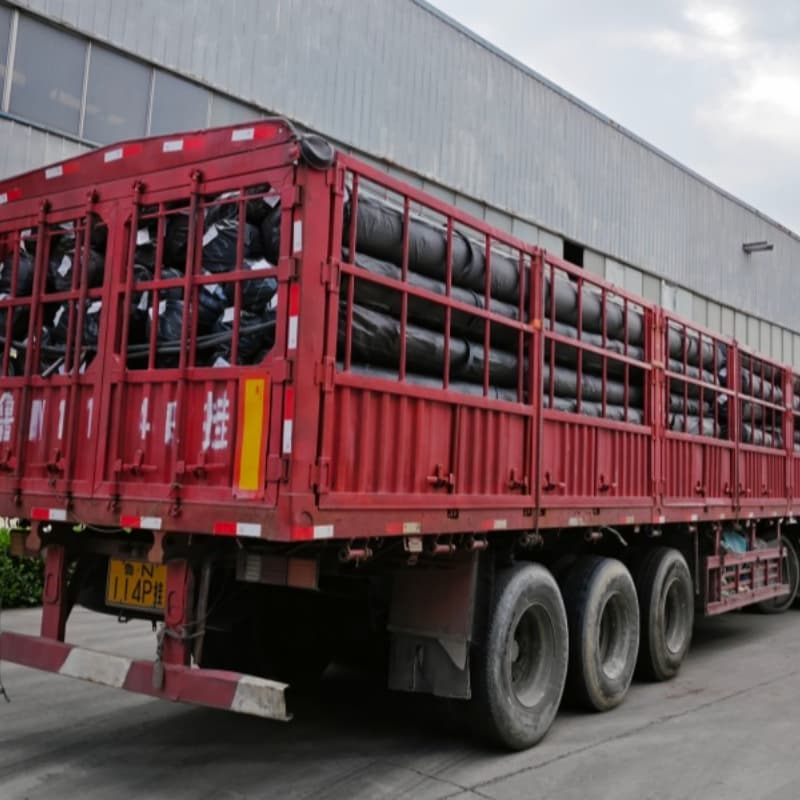
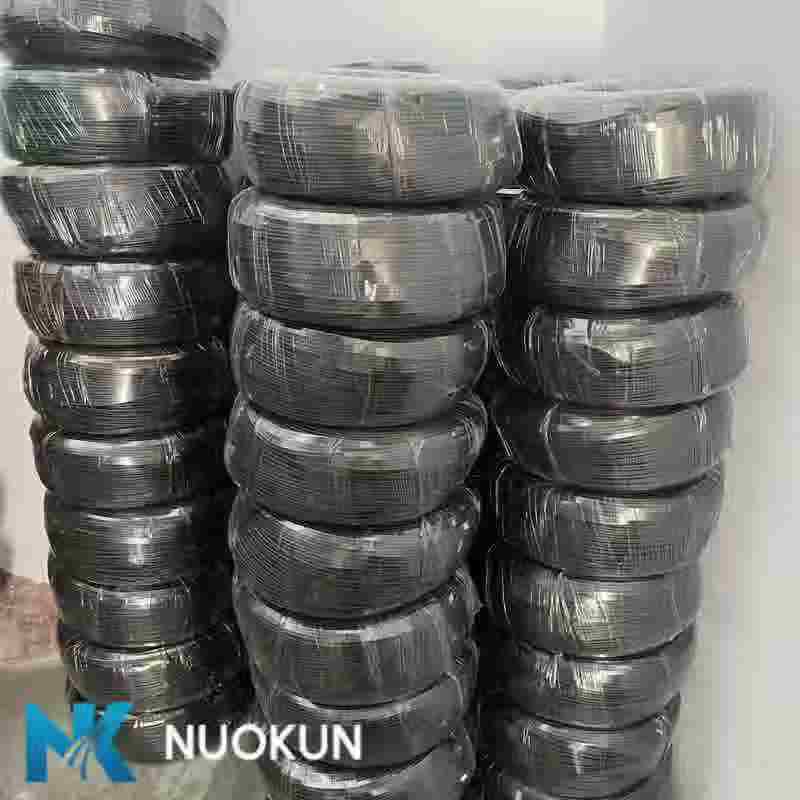
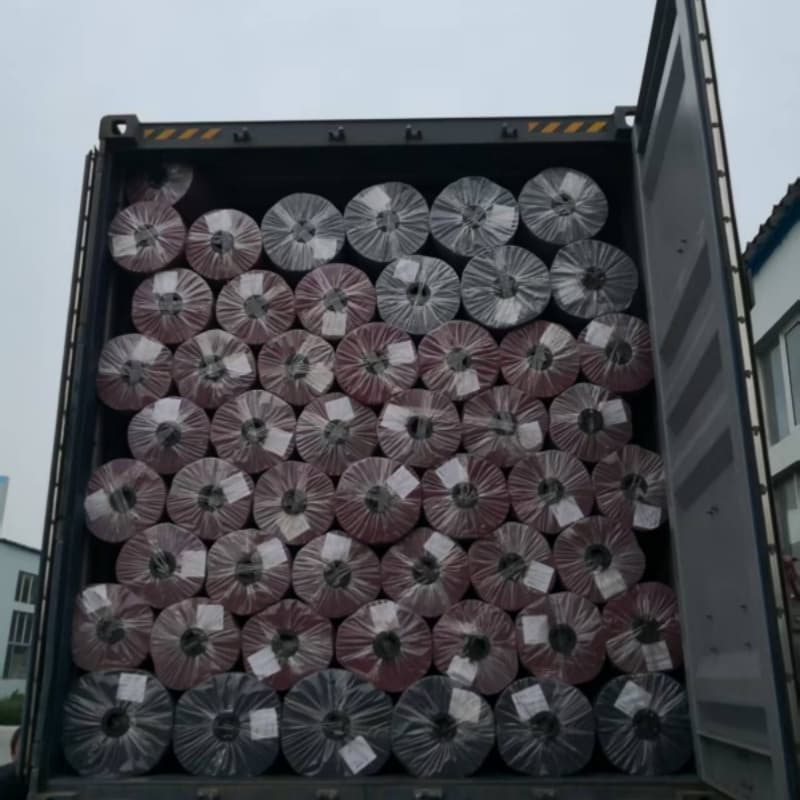
Packing and Delivery
 |
 |
 |
 |
 |
Q1: Can one welding rod be used for HDPE, LLDPE, and PE geomembranes?
Not necessarily. Each welding rod should be compatible with the base geomembrane’s polymer type and formulation. Separate material options may be required.
Q2: Can welding rods be used for geomembrane repairs?
Yes. They are commonly used for extrusion-welded patch repairs, provided the patch and welding rod are compatible with the original liner.
Q3: Why must welding rods be kept dry?
Moisture entering the molten polymer can cause bubbles, pores, and defects in the weld. Welding rods should therefore be stored in a clean and dry environment.
Q4: What is a 5kg geomembrane welding rod used for?
It is used with an extrusion welding machine to join, reinforce, and repair geomembranes, particularly at corners, T-joints, pipe penetrations, and damaged areas.
Q5: How much does one 5kg roll of geomembrane welding rod cost?
The price of 5kg welding rod is USD 10 per roll.
leave a message
Scan to Wechat/Whatsapp :



 English
 Français
 Deutsch
 Русский
 Español
 Português
 عربي
 Tiếng Việt
 Indonesia
 हिन्दी



 IPv6 network supported