leave a message
If you are interested in our products and want to know more details,please leave a message here,we will reply you as soon as we can.
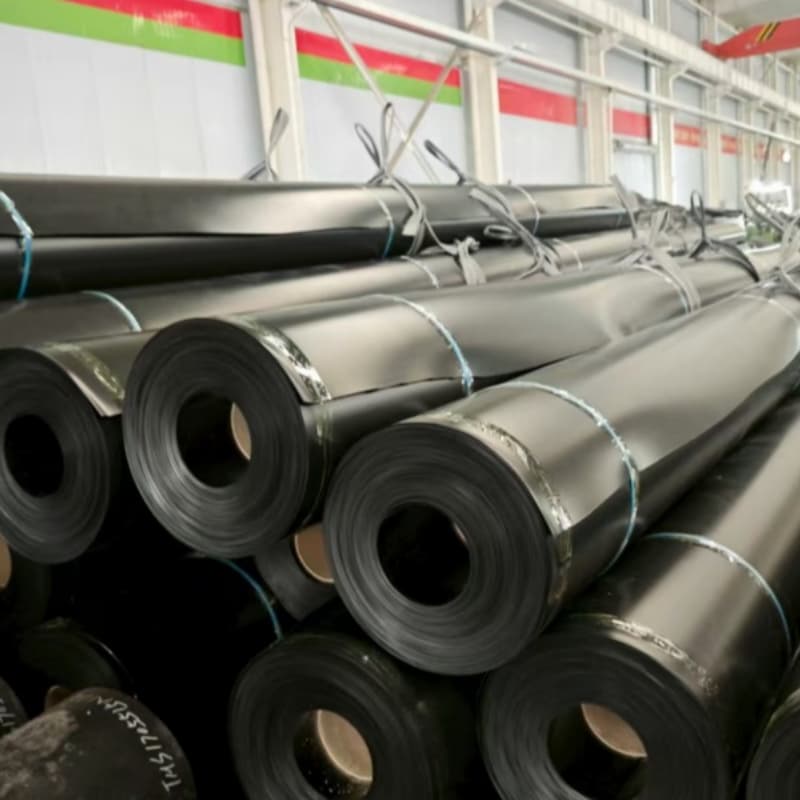
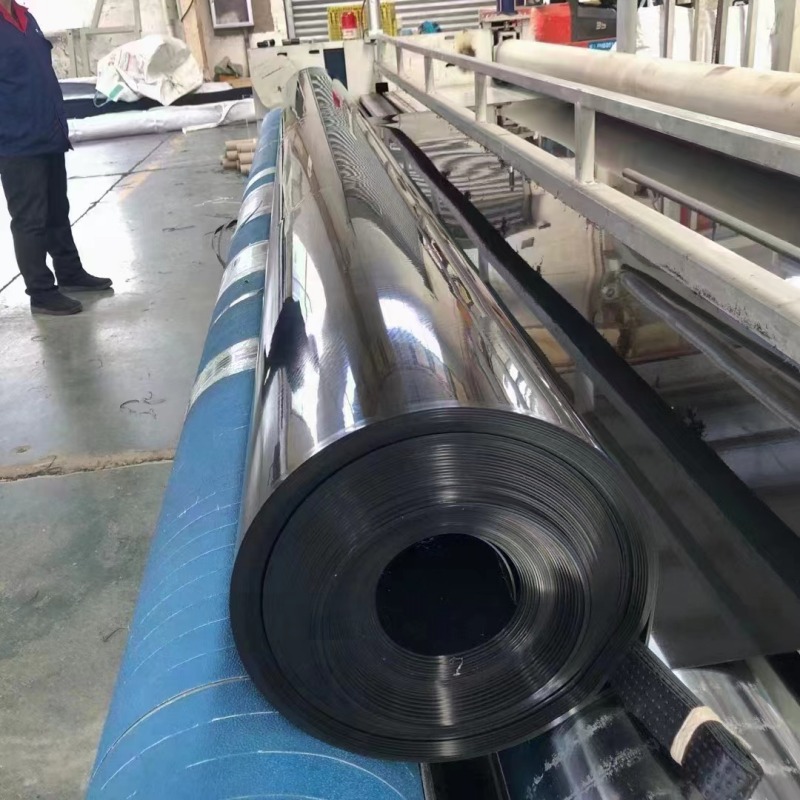
HDPE geomembrane is a key component of modern landfill liner systems, designed to create a continuous barrier between waste materials and the surrounding soil and groundwater. Manufactured from high-quality polyethylene resin, the geomembrane combines low permeability with strong mechanical properties, chemical resistance, and long-term weathering performance.
In landfill applications, the liner needs to withstand contact with leachate, installation stress, ground movement, and long-term outdoor exposure. A properly selected and professionally welded HDPE geomembrane helps control seepage and provides reliable containment beneath and around waste storage areas.
Depending on the landfill design, the geomembrane can be used together with geotextiles, drainage layers, and other geosynthetic materials to form a complete liner and leachate management system.
From municipal solid waste landfills to industrial waste disposal facilities, the right HDPE geomembrane provides a practical and durable barrier for long-term environmental protection.
Color :
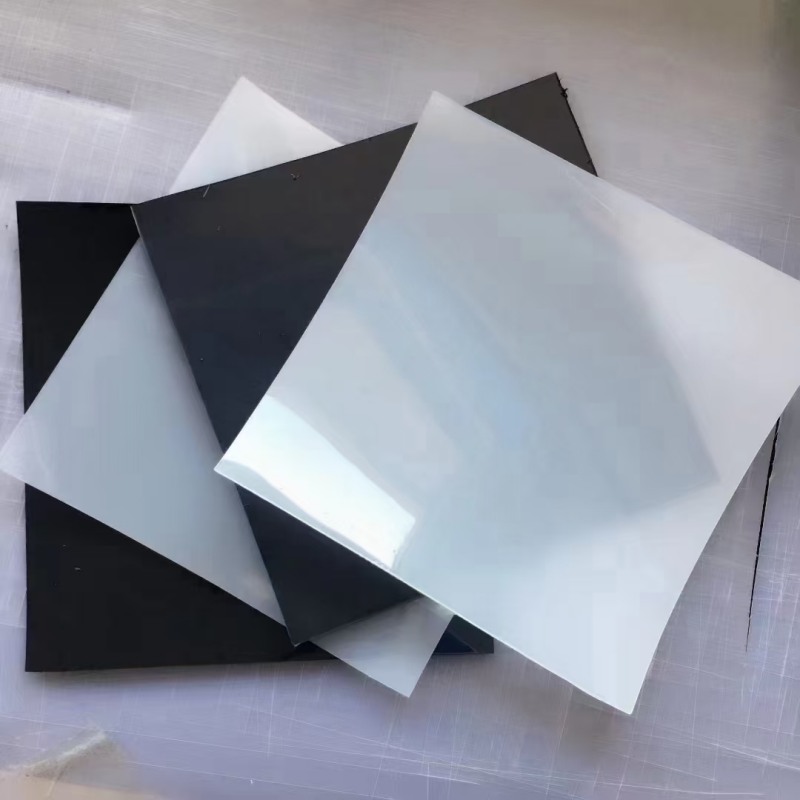
Black (regular), White, Green, BlueThickness :
0.1-3.0mmWidth :
1-8mLead Time :
7-14 days after deposit paymentOrder(MOQ) :
2000㎡Payment :
FOB (Can communicate and negotiate)Product Origin :
ChinaShipping Port :
Qingdao
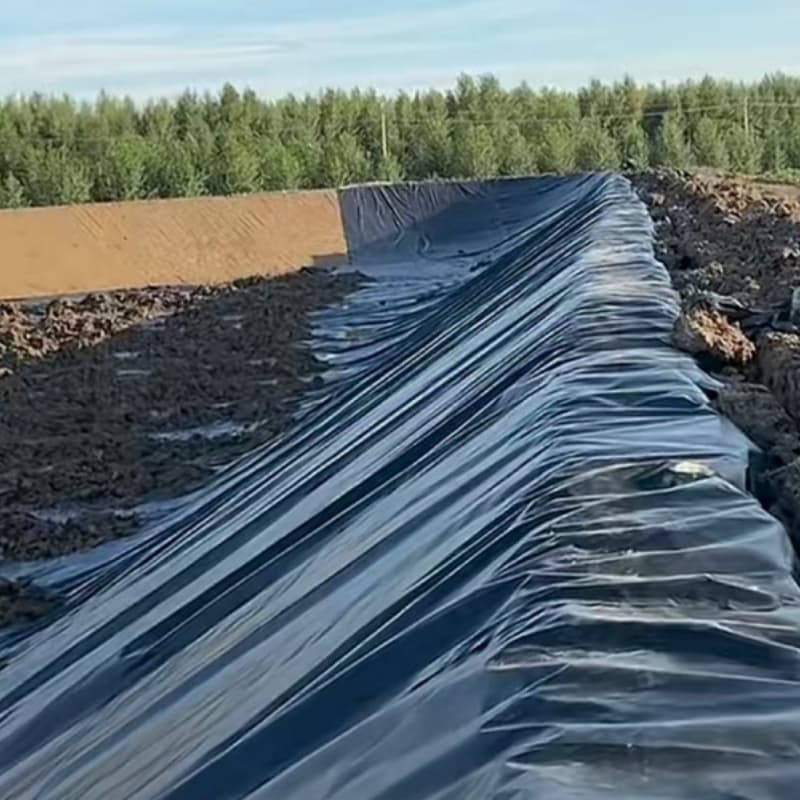
Why HDPE Geomembrane is commonly used for Landfill Liner
HDPE geomembrane offers very low permeability, good chemical resistance, UV resistance, strong puncture resistance, and reliable welding performance, making it widely used in modern landfill liner systems.
However, material quality alone is insufficient. Numerous factors are also of great significance in ensuring long-term liner performance, such as proper subgrade preparation, seam welding, handling, protection, and field testing.
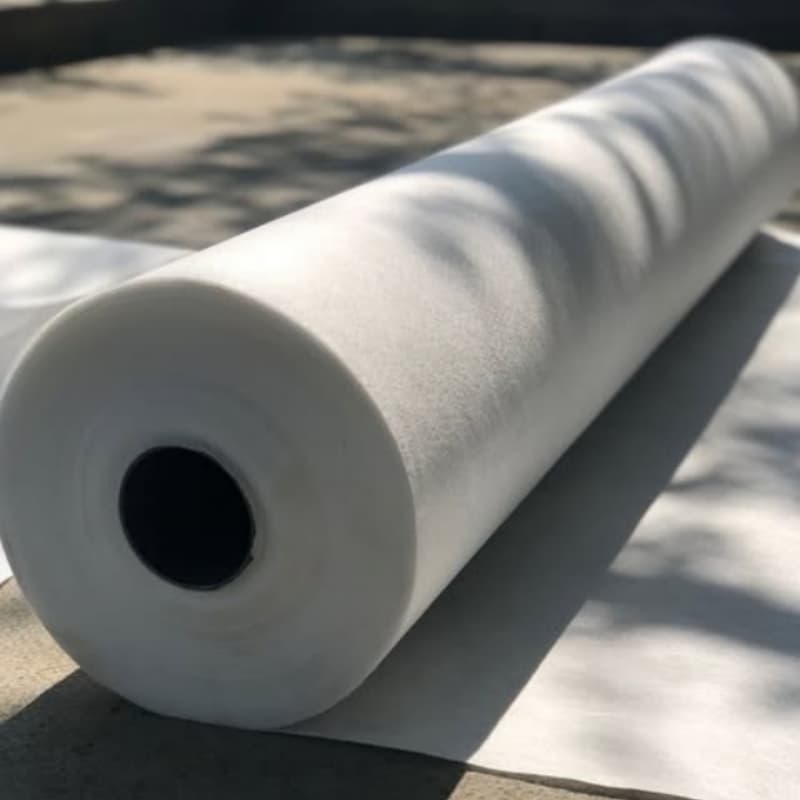
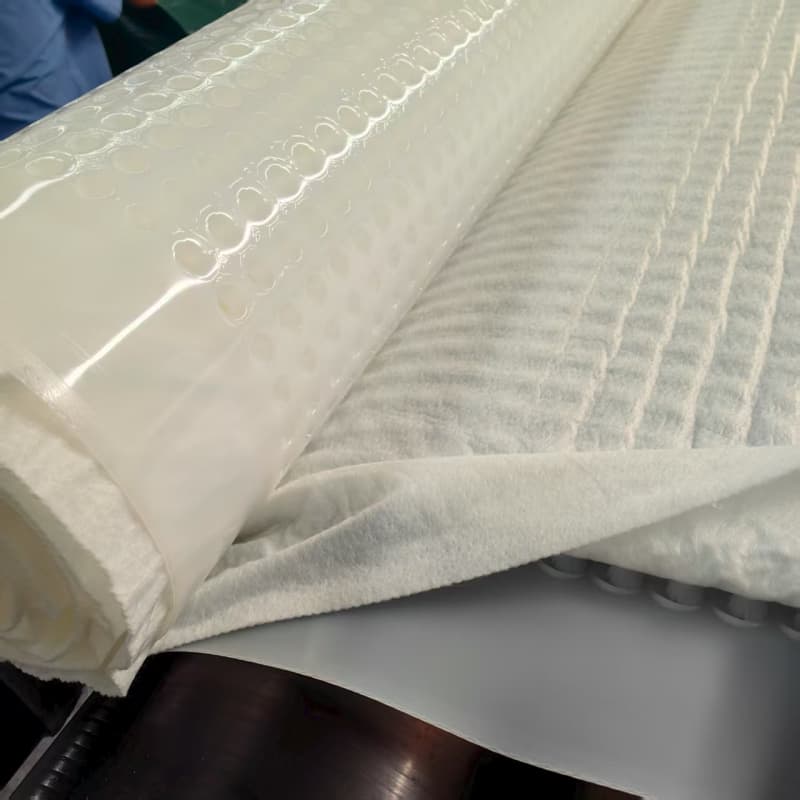
A typical landfill liner system may also include a nonwoven geotextile beneath the geomembrane to provide puncture protection, along with a drainage layer above it for leachate collection.
Compared with traditional compacted clay liners, HDPE geomembrane provides efficient installation and practical quality control through visual inspection and seam testing. The combination of quality materials and proper installation creates a reliable and durable landfill containment system.
Smooth vs Textured Geomembrane
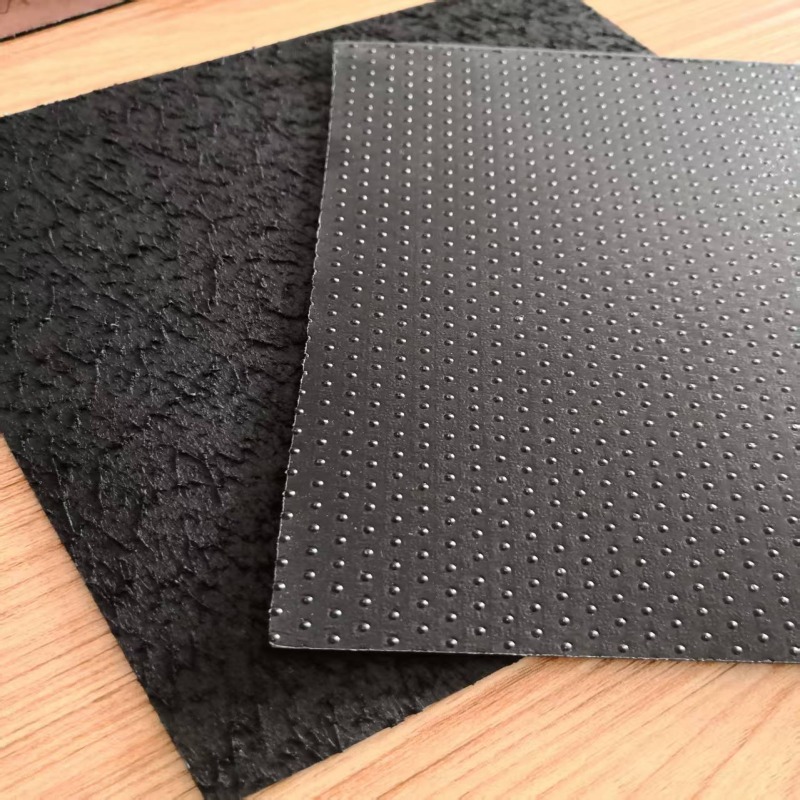
Smooth geomembrane is commonly used in relatively flat bottom liner areas, where the main focus is providing a continuous and low-permeability barrier. Its smooth surface also makes handling, seaming, and inspection relatively straightforward during installation.
For slopes, textured geomembrane is often preferred because its rougher surface provides higher interface friction with adjacent geosynthetic or soil layers. This can help improve interface stability and reduce the potential for sliding, particularly on steeper slopes. In demanding applications such as mining ponds, double-textured HDPE geomembrane is also commonly considered when higher friction is required on both sides of the liner.
However, surface texture is only one part of slope stability. Subgrade preparation, drainage design, interface materials, slope angle, anchoring, and installation quality all need to be considered together.
Heavy rainfall, poor drainage, or insufficient interface friction can increase the risk of liner movement on steep slopes. For this reason, choosing between smooth and textured geomembrane should be based on the actual slope conditions and the overall liner system design—not simply on membrane thickness or material type.
| Comparison | Smooth Geomembrane | Textured Geomembrane |
| Surface Structure | Smooth and even surface with relatively low interface friction | Textured surface designed to provide higher interface friction. |
| Friction Performance | Lower friction, suitable where high interface friction is not a primary requirement | Higher friction performance can improve interface stability with adjacent materials. |
| Slope Stability | On steep slopes, performance should be evaluated together with slope angle, subgrade, drainage, and anchoring design. | Often preferred where higher sliding resistance is required, while proper system design remains essential. |
| Installation & Welding | The smooth surface generally makes handling, deployment, and welding straightforward. |
The textured surface requires greater attention to deployment, overlaps, and preparation around welding areas. |
| Common Configuration | Typically available with smooth surfaces on one or both sides. | Available with single-textured or double-textured surfaces. |
Common Geomembrane Thickness for Landfill Projects
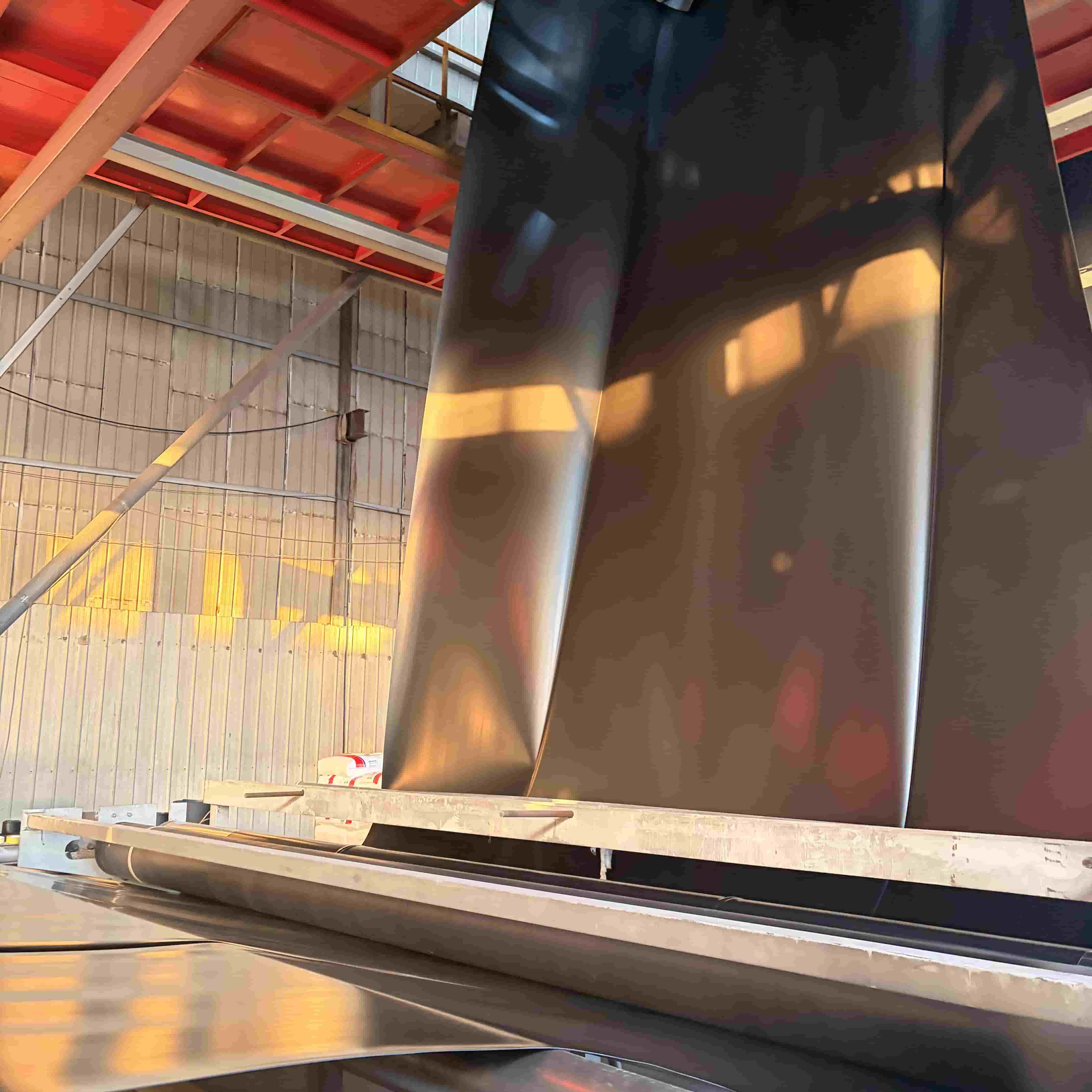
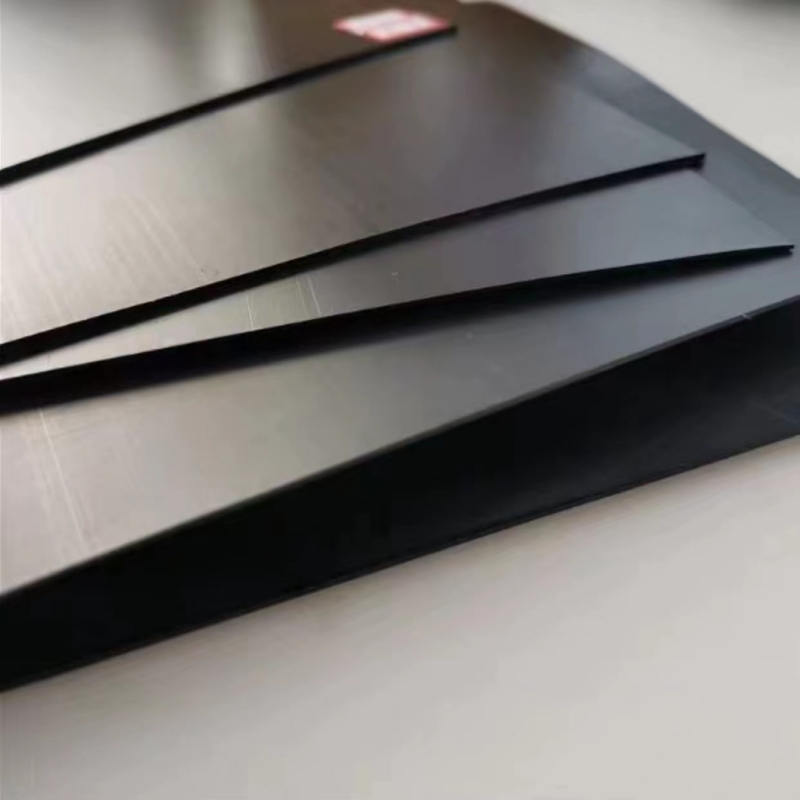
Most landfill projects typically use 1.5 mm or 2.0 mm HDPE geomembrane, making these two thicknesses a common choice for many containment and liner systems. The final specification, however, should always be based on the actual site conditions and project requirements.
For mining ponds and other demanding applications, the liner may need to be thicker, especially where the subgrade contains rough rock, sharp materials, or where significant settlement is expected. In these situations, a thicker geomembrane can be combined with a heavy-duty geotextile protection layer to reduce the risk of puncture and mechanical damage.
So, how do you choose the right thickness? Several factors should be considered, including subgrade and rock conditions, settlement risk, waste or material loading, chemical exposure, installation conditions, and the required design life of the liner system.
One important point is that thicker does not automatically mean safer. Even a 2.0 mm or thicker geomembrane can be damaged if the subgrade is poorly prepared or the protective layers are inadequate. Proper surface preparation, material selection, installation, welding, and quality control are just as important as choosing the right thickness.
 |
 |
Common Problems During Geomembrane Installation
Sharp Stones Under the Liner
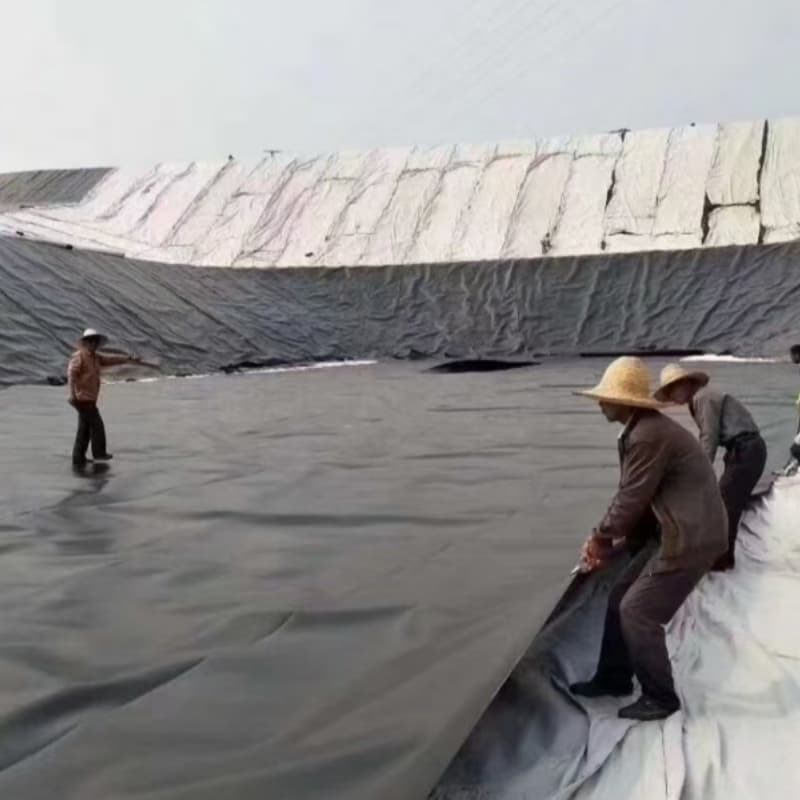
This happens more often than people think. A small sharp stone may not look serious during installation, but once the liner is covered and the load above it increases, the pressure can create a puncture or stress point over time. In landfill and mining applications, this can become a much bigger problem after the system is already in service.
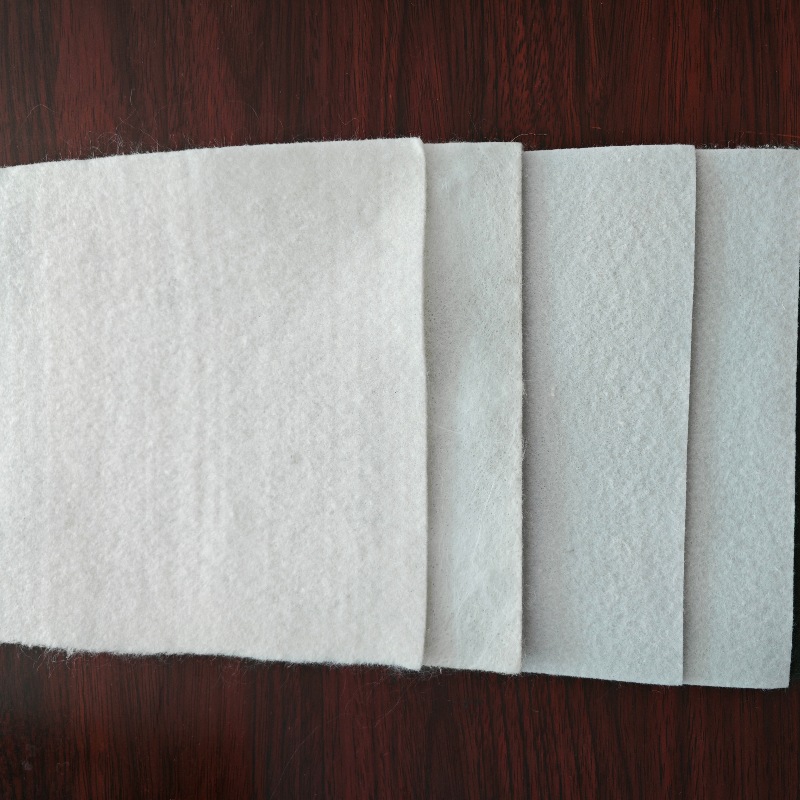
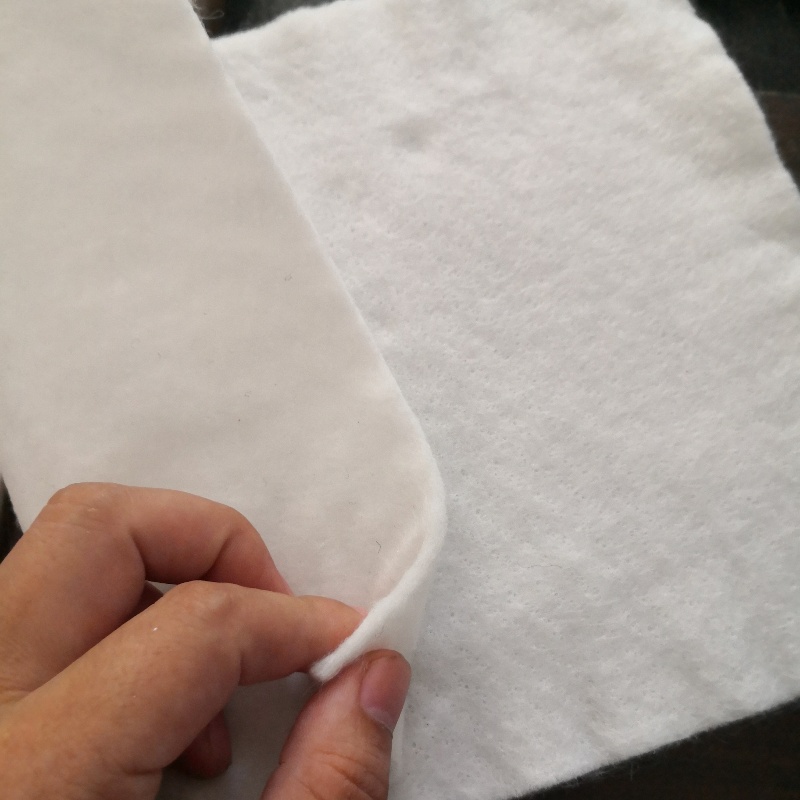
That’s why many projects place a nonwoven geotextile protection layer beneath the geomembrane. It helps separate the liner from rough subgrade materials and reduces the risk of localized puncture damage. Compared with the potential cost of repairing a damaged liner, adding a suitable protection layer is often a relatively simple precaution.
Welding Problems
Welding quality can change quickly with weather and site conditions. On some mining projects, the welding crew may need to adjust machine settings several times during the day because the liner surface temperature can change significantly under direct sunlight.
Cold mornings can create a different problem. If the welding temperature and travel speed are not adjusted to suit the actual conditions, the seam may not achieve the required bond strength. Wind, dust, moisture, and surface contamination can also affect the welding process.
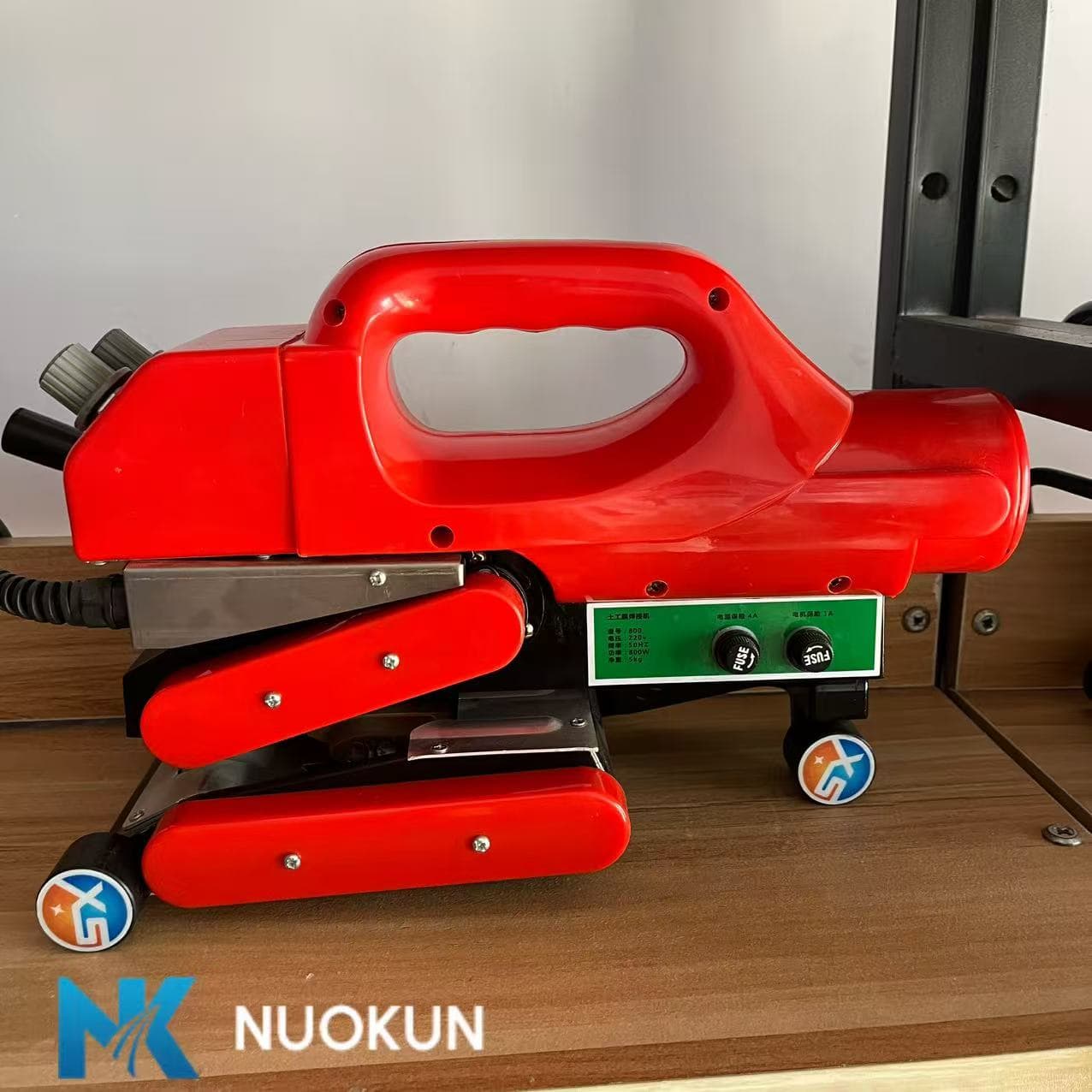
For this reason, experienced crews normally check the membrane condition and perform trial welds before starting or restarting production. Proper welding parameters and regular seam testing are essential for maintaining reliable connections between geomembrane panels.
Anchor Trench Problems
The anchor trench is a small part of the overall liner system, but its role is important. Poor trench dimensions, inadequate soil compaction, or improper liner placement can allow the geomembrane to move under tension.
This becomes particularly important on steep landfill slopes. During heavy rain, waste filling, or other changes in loading conditions, an inadequately anchored liner may experience movement or excessive stress.
A properly designed and constructed anchor trench helps secure the geomembrane at the perimeter and transfers the liner forces into the surrounding soil. The trench dimensions and construction method should therefore be determined according to the project design, site conditions, and slope geometry rather than using the same detail for every project.
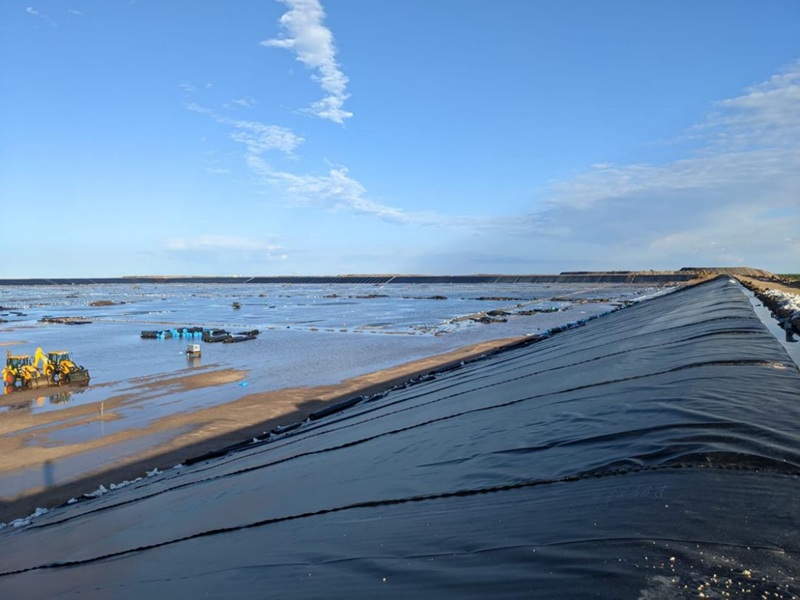
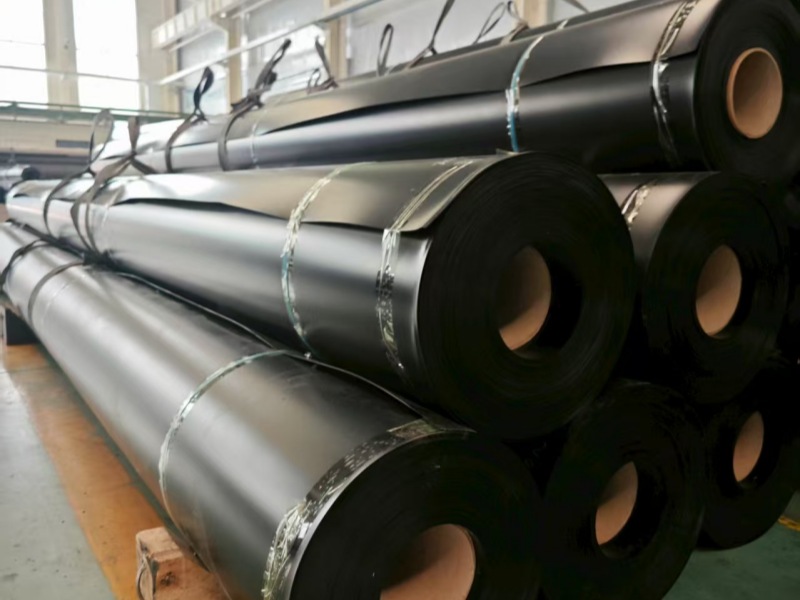
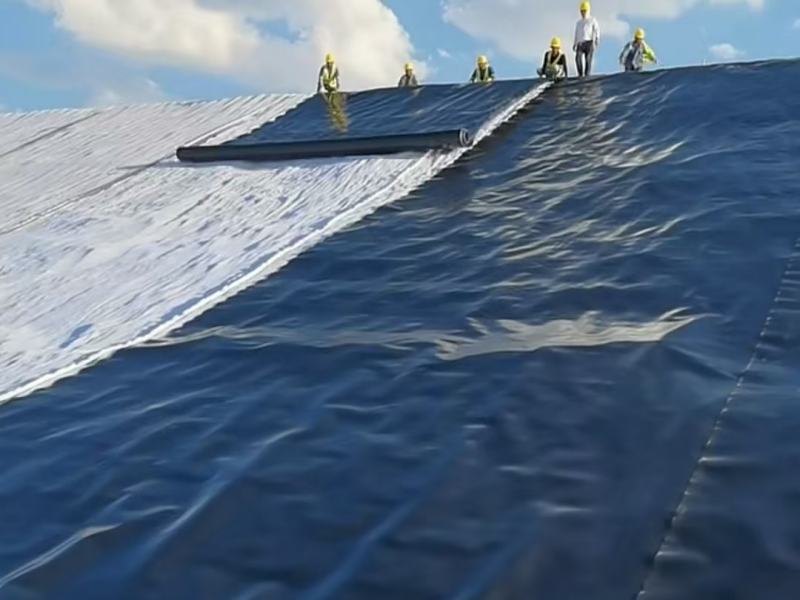
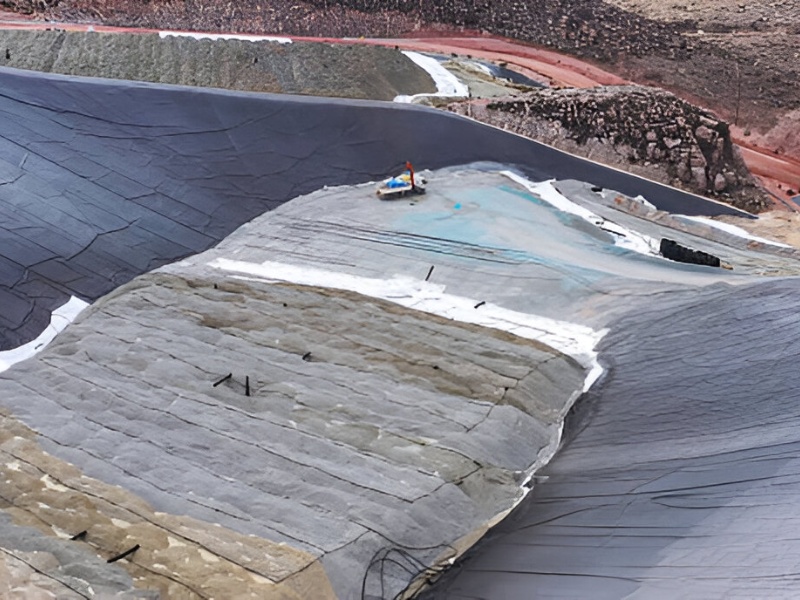
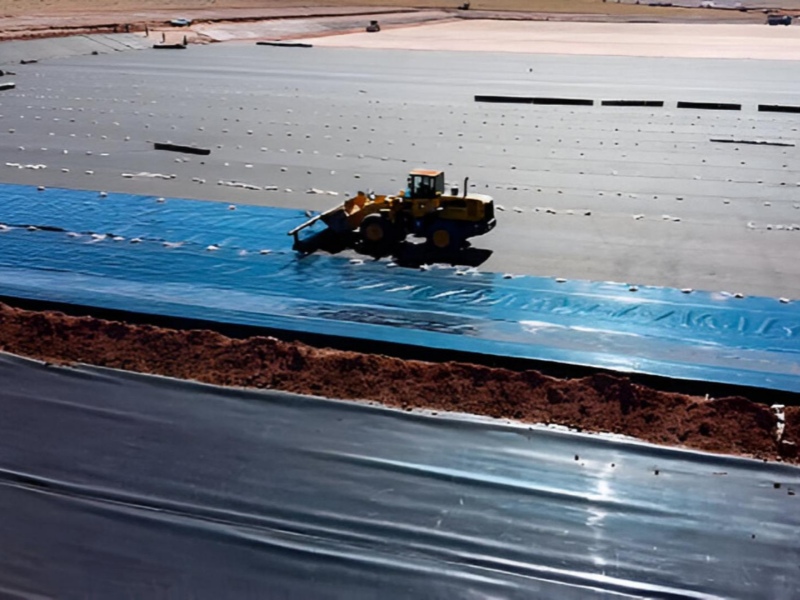
A mining project example in South America
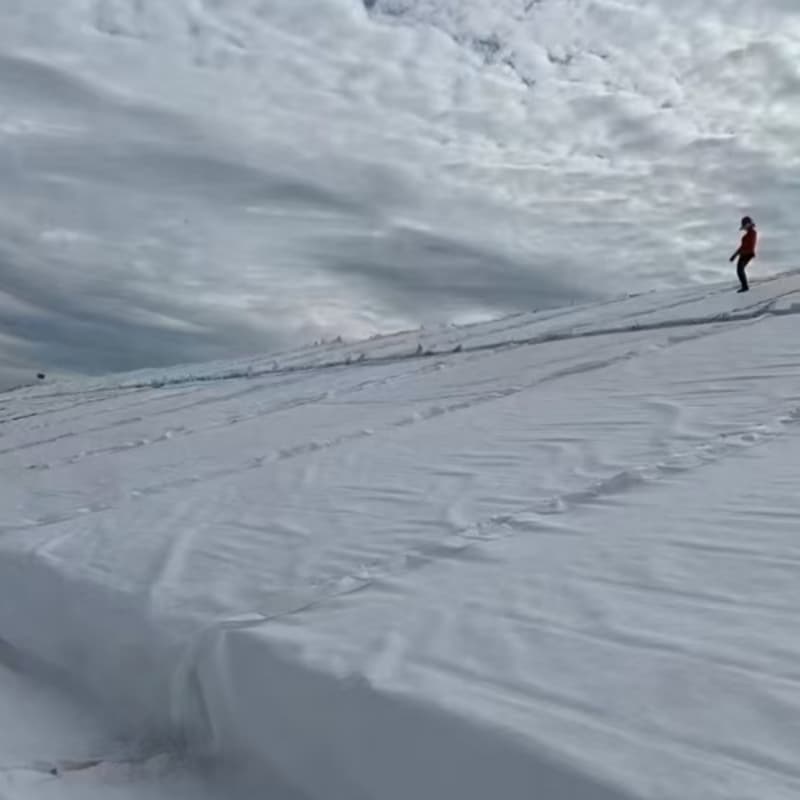
One mining project in South America required a large-scale geomembrane containment system covering approximately 48,000 m². The project used 2.0 mm double-textured HDPE geomembrane together with a nonwoven geotextile protection layer to provide additional protection against puncture and mechanical damage.
The site presented several challenging conditions. The project included steep slopes, strong UV exposure, uneven subgrade conditions, and seasonal heavy rainfall. These factors meant that the liner system needed to provide not only reliable impermeability, but also sufficient mechanical strength, interface stability, and long-term resistance to environmental exposure.
Why Double-Textured HDPE Was Selected
Slope stability was one of the main concerns during the design stage. On steep slopes, a smooth geomembrane can provide relatively low interface friction with adjacent materials. Depending on the slope geometry and overall system design, this may increase the potential for relative movement between liner components.
For this reason, the contractor selected 2.0 mm double-textured HDPE geomembrane for the project. The textured surfaces provide higher interface friction, which can help improve stability between the geomembrane and adjacent geosynthetic or soil layers. The double-textured structure was particularly suitable for areas where friction performance was an important design consideration.
However, the geomembrane surface was not treated as the only factor affecting slope stability. The project also considered slope angle, subgrade preparation, drainage, anchoring, interface materials, and construction quality as part of the overall liner system.
Protection Against Rough Subgrade Conditions
The site also contained areas where the underlying ground conditions required additional protection. Before geomembrane installation, the subgrade was carefully prepared to remove sharp rocks, roots, debris, and other materials that could potentially damage the liner.
A nonwoven geotextile protection layer was installed beneath the geomembrane to provide an additional buffer between the liner and the prepared subgrade. This helped reduce localized pressure and lower the risk of puncture during installation and subsequent loading.
For large mining projects, this type of protection is particularly important because repairing liner damage after the system has been covered can be much more difficult and expensive than preventing the damage during installation.
Welding and Field Quality Control
With approximately 48,000 m² of geomembrane, welding quality was another critical part of the project. Large liner systems contain a significant number of seams, and the quality of these seams can directly affect the overall containment performance.
Because the project was exposed to strong sunlight, membrane surface temperatures could change considerably throughout the day. The welding crew therefore needed to monitor actual site conditions and adjust welding temperature, speed, and pressure as required.
Trial welds were used to confirm suitable machine settings before production welding. During installation, welded seams were also inspected and tested using appropriate field quality-control procedures to identify potential defects before the liner was covered.
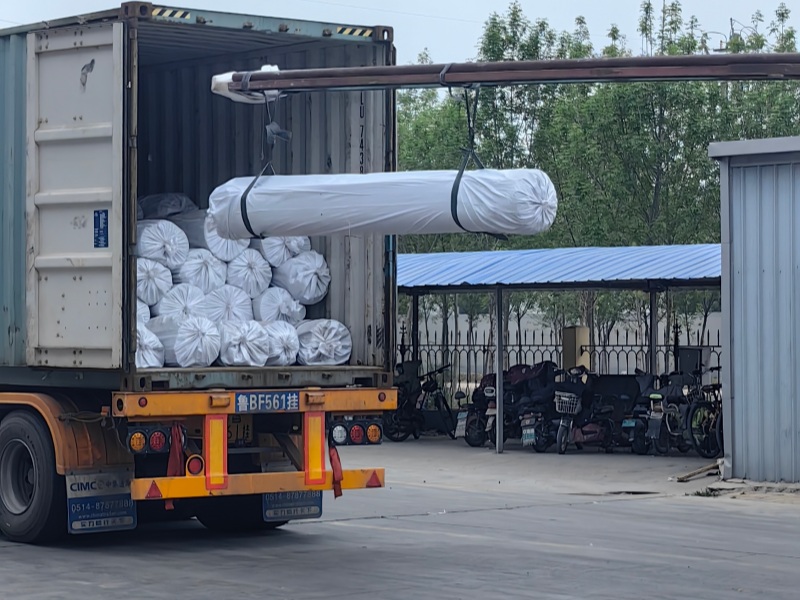
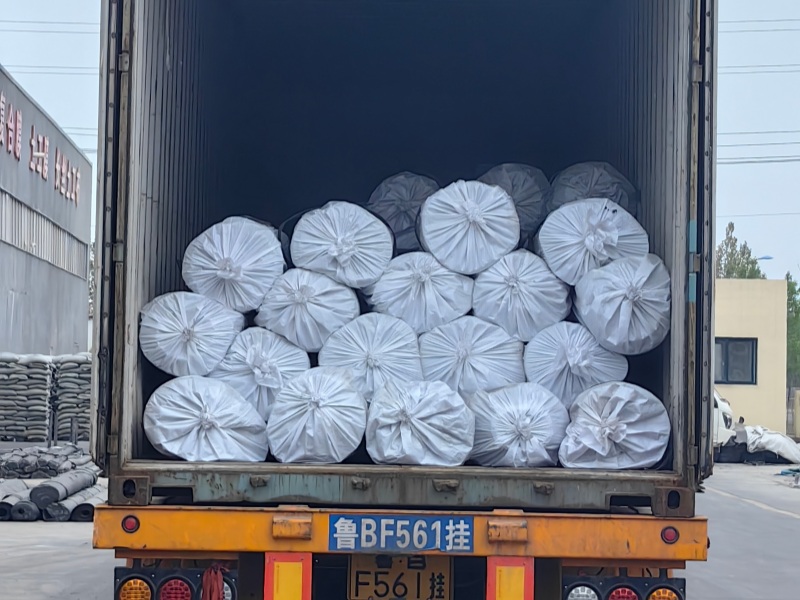
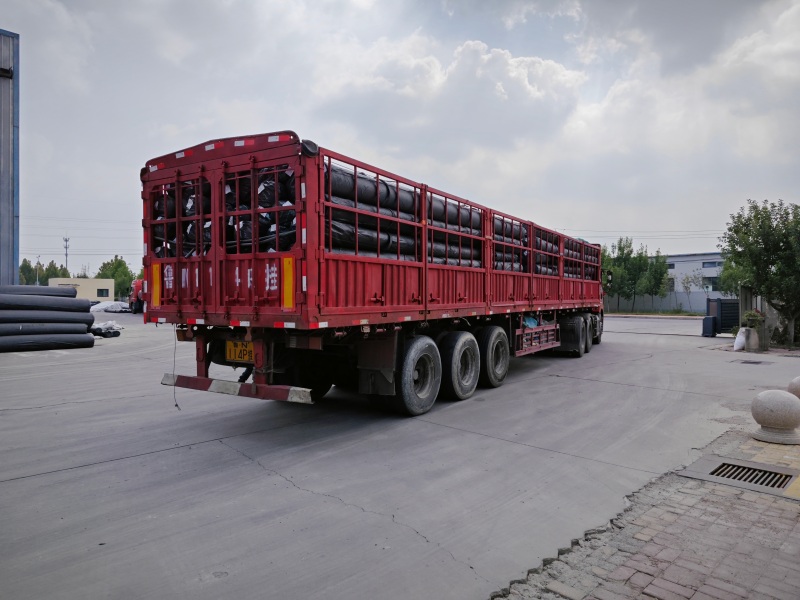
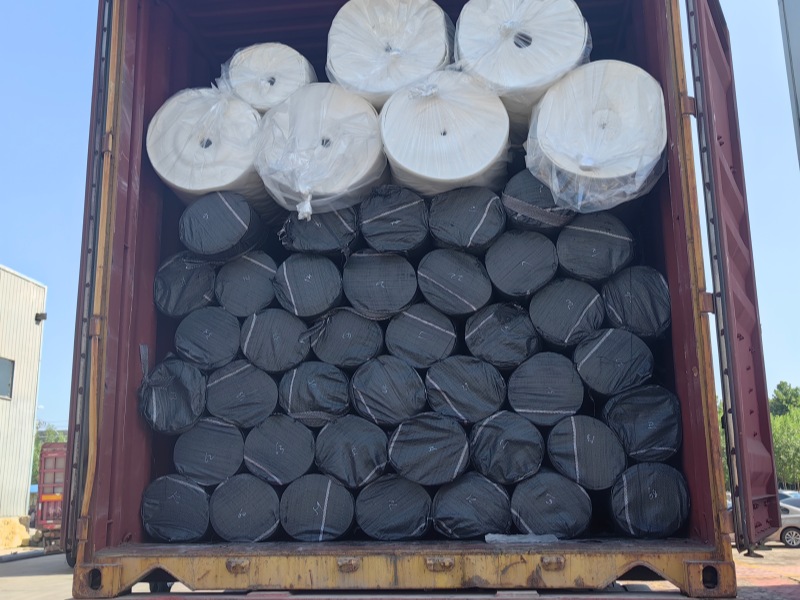
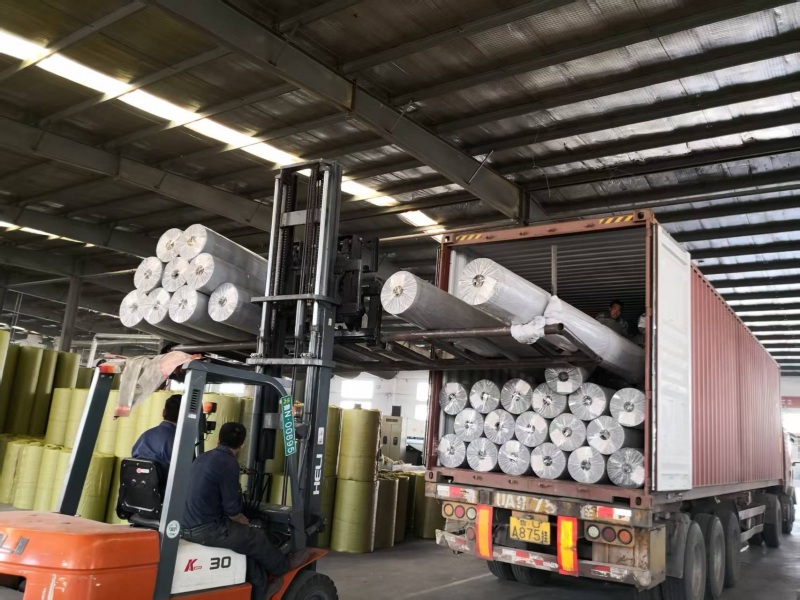
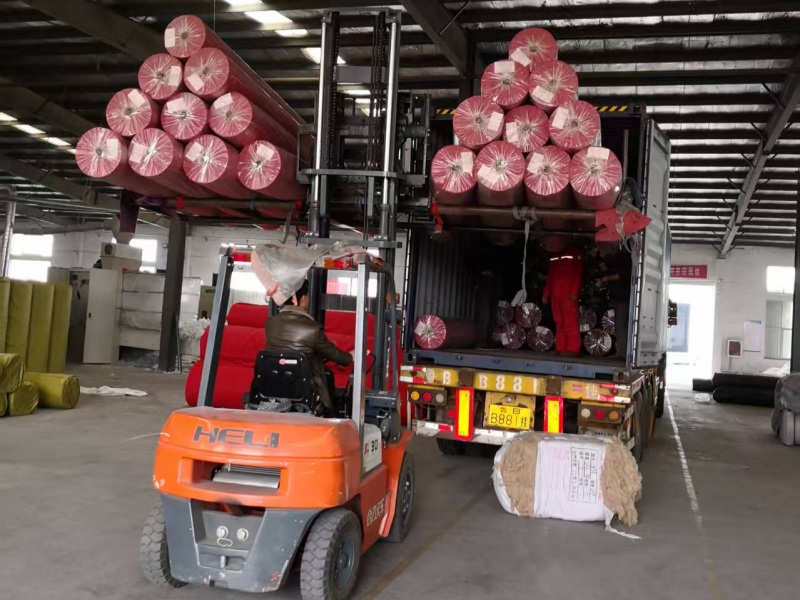
Packing and Delivery
 |
 |
 |
 |
 |
 |
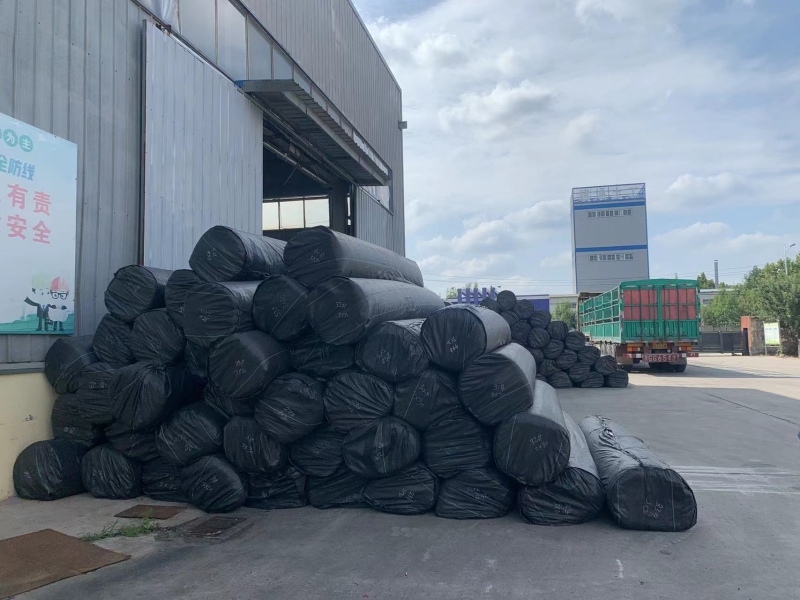 |
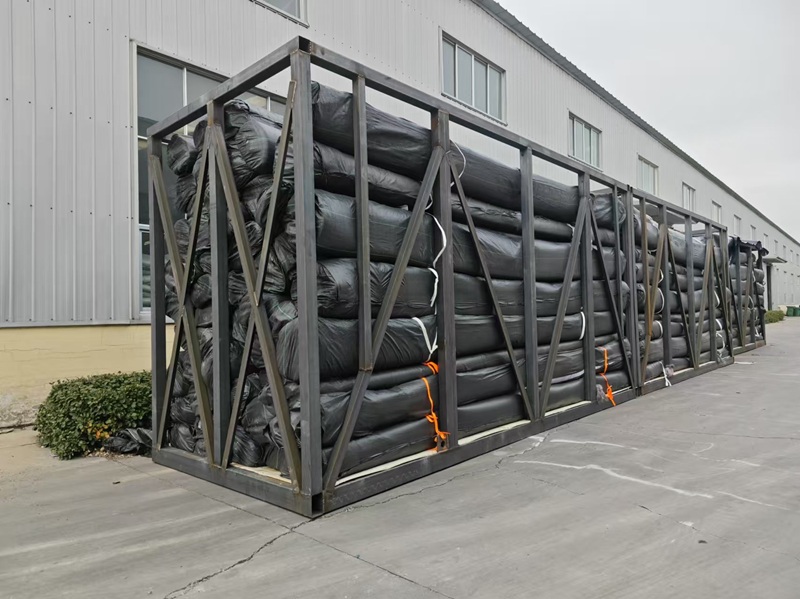 |
Quality Standards and Testing
Most large landfill and mining projects require the geomembrane to meet recognized technical standards and project specifications. GRI-GM13 and ASTM-based testing are commonly referenced for HDPE geomembrane quality control, covering important properties such as thickness, tensile strength, tear resistance, puncture resistance, carbon black content, and oxidative induction time (OIT).
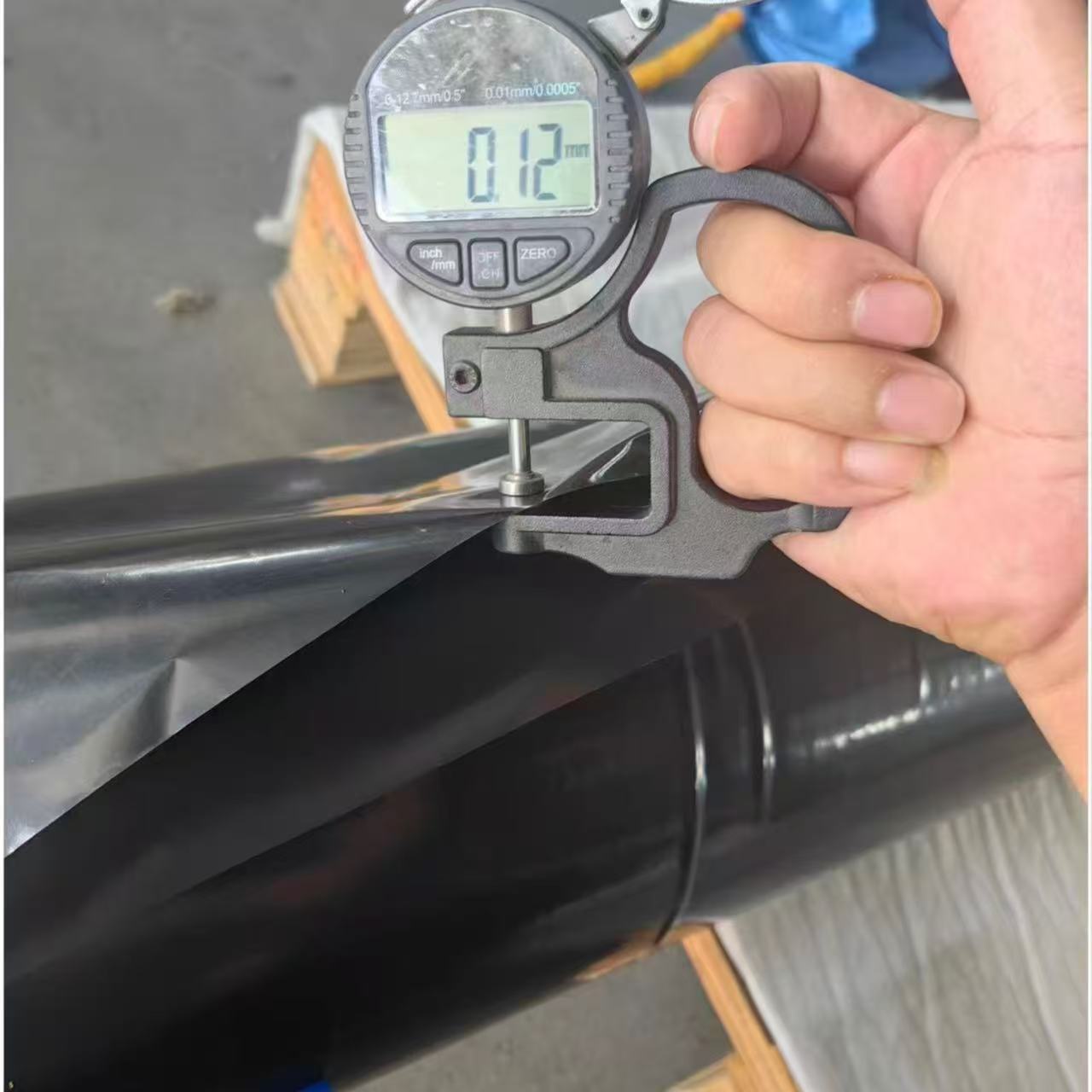
Thickness testing is also important because consistent thickness helps ensure predictable mechanical and barrier performance across the entire roll. For projects with demanding requirements, manufacturers may provide factory inspection records and detailed test reports for each production batch.
OIT testing is used to evaluate the material’s resistance to oxidative degradation and provides useful information about the long-term durability of the geomembrane.
Weld quality is equally important. A good geomembrane can still perform poorly if the seams are not properly welded. Depending on the project requirements, seam quality may be verified through non-destructive testing, peel testing, shear testing, and other applicable field inspection methods.
For some international or export projects, customers may also request third-party inspection before shipment. Although this adds another step to the production and delivery process, it provides an additional layer of quality control and helps identify potential issues before the material arrives at the job site.
FAQ
What thickness HDPE geomembrane is commonly used for landfills?
Many landfill projects use 1.5 mm or 2.0 mm HDPE geomembrane, but the appropriate thickness depends on the project design, subgrade conditions, waste loading, slope geometry, protection requirements, and expected service life.
Why is textured geomembrane used on slopes?
Textured geomembrane provides higher interface friction than smooth geomembrane. This can help improve stability between the liner and adjacent materials and reduce the potential for sliding on slopes when properly incorporated into the overall liner design.
Does a thicker geomembrane always perform better?
Not necessarily. Thickness is only one factor in liner performance. Poor subgrade preparation, inadequate protection, poor welding, improper anchoring, or unsuitable installation conditions can still cause damage or failure even when a thick geomembrane is used.
Can HDPE geomembrane be used together with GCL?
Yes. HDPE geomembrane and Geosynthetic Clay Liner (GCL) can be used together in many landfill and containment systems. The two materials provide complementary barrier functions, and the final configuration should be determined according to the project design and applicable specifications.
leave a message
Scan to Wechat/Whatsapp :



 English
 Français
 Deutsch
 Русский
 Español
 Português
 عربي
عربي Tiếng Việt
 Indonesia
 हिन्दी


 IPv6 network supported