
leave a message
If you are interested in our products and want to know more details,please leave a message here,we will reply you as soon as we can.

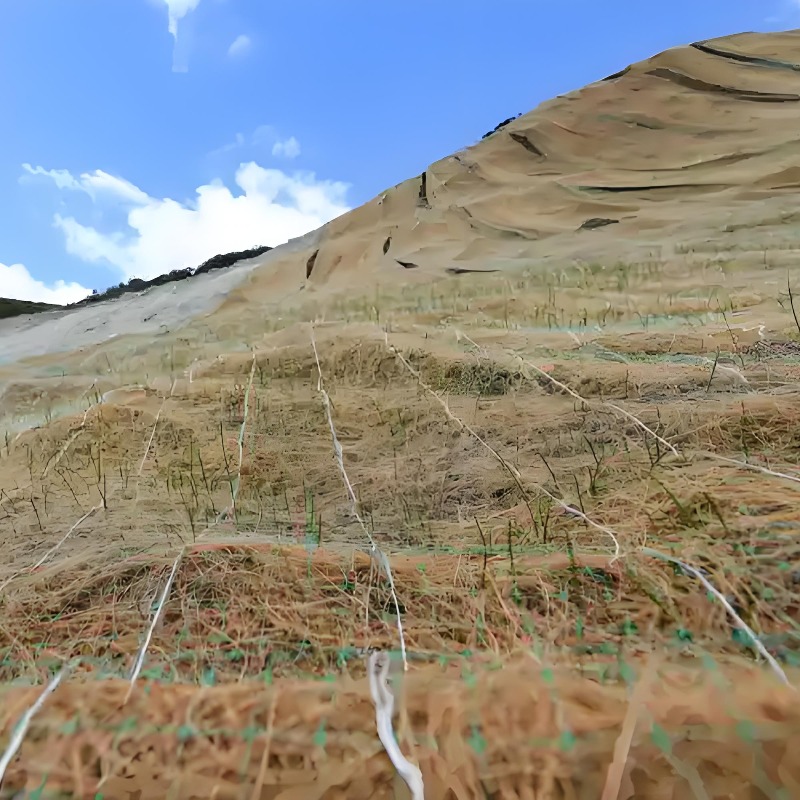
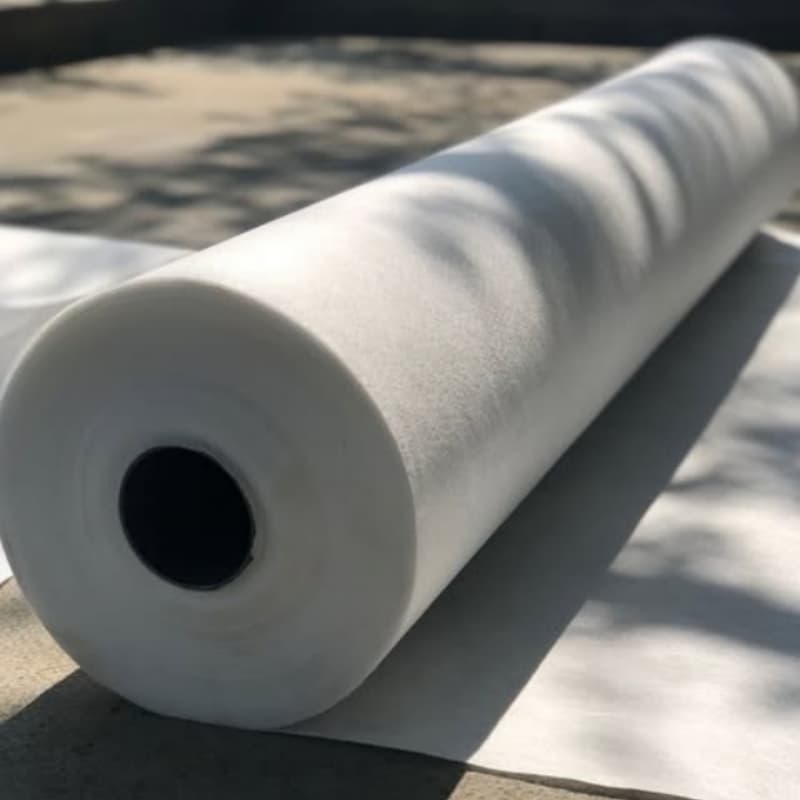
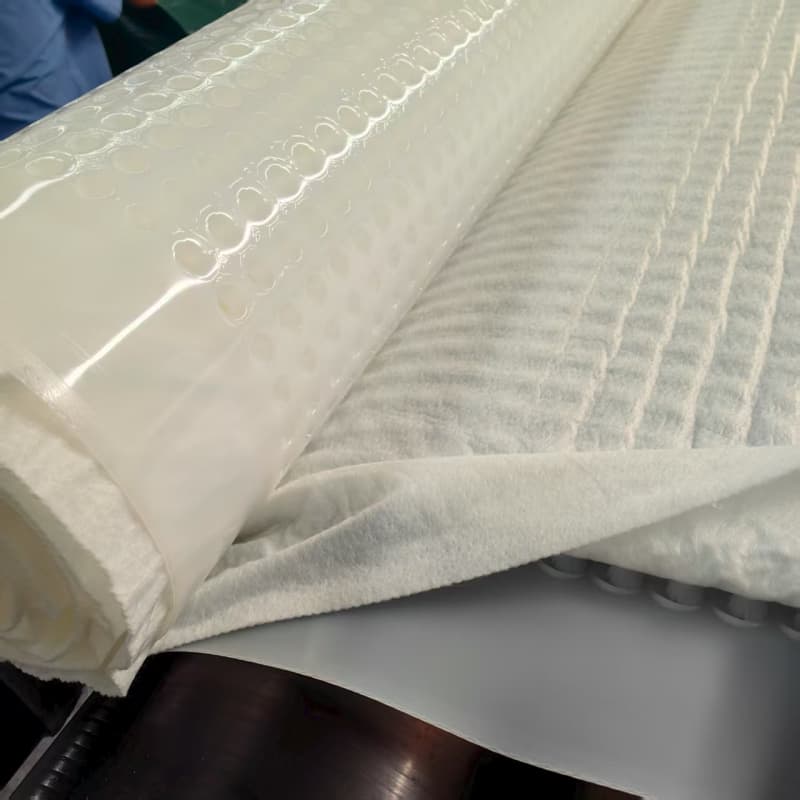
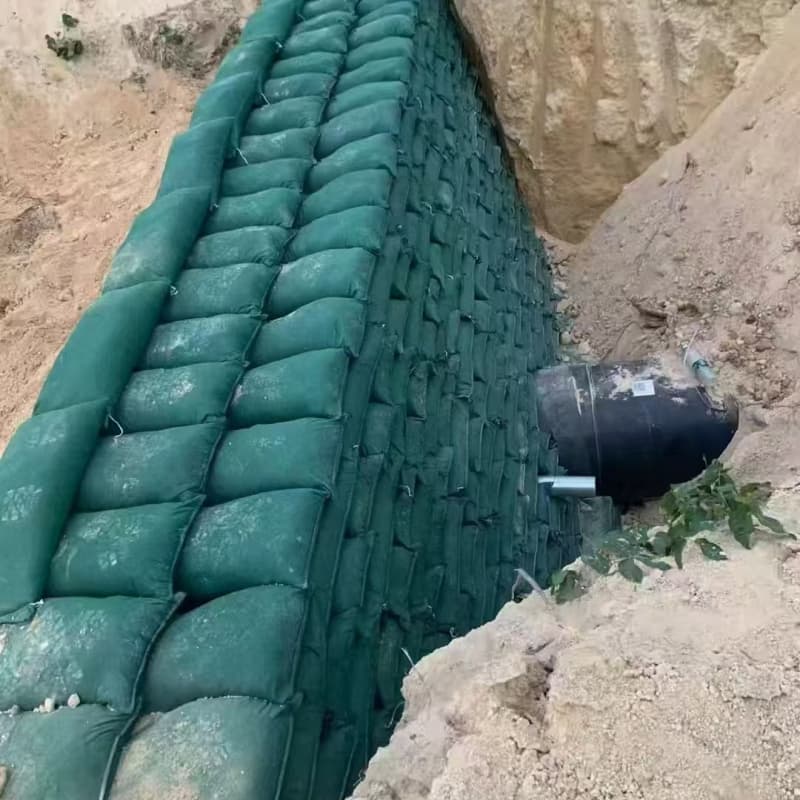
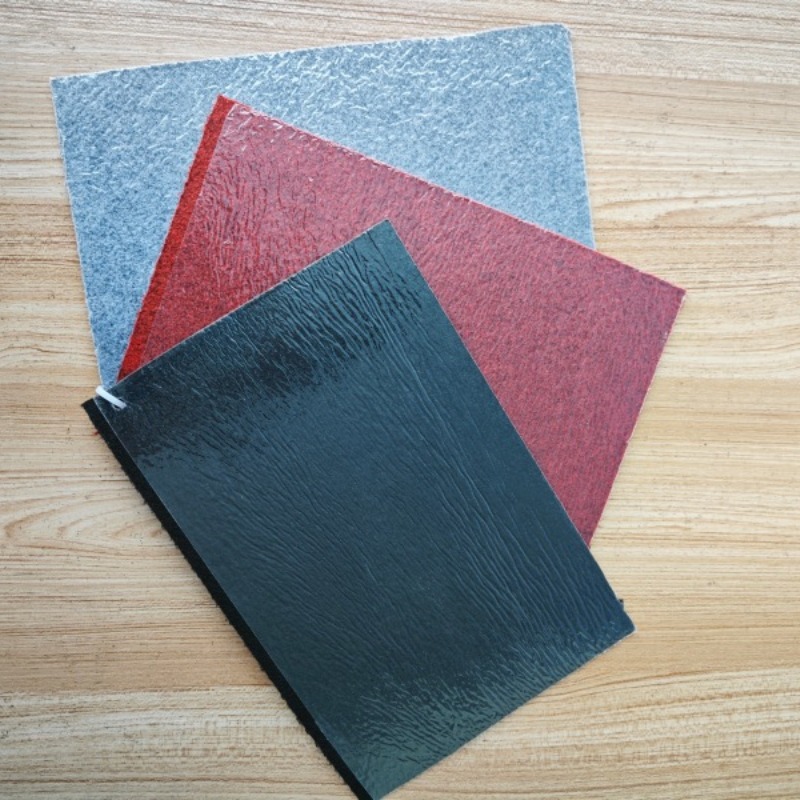
Filament nonwoven geotextile and staple fiber nonwoven geotextile are both types of nonwoven geotextile and are widely used in roads, railways, landfills, water conservancy projects, slope engineering, drainage systems, and geomembrane lining systems. Depending on project requirements, nonwoven geotextiles mainly perform four functions: Filtration, Separation, Drainage, and Protection.
Filament Nonwoven Geotextile is manufactured from continuous filament fibers. Through web formation, needle punching, and related processes, the fibers form a stable nonwoven structure. The continuous fiber structure can provide good structural integrity, while tensile performance, elongation, and puncture resistance can be controlled according to the product specification.
Staple Fiber Nonwoven Geotextile is manufactured from staple fibers of a defined length. The fibers are opened, carded, formed into a web, and needle punched to create the final product. The interlocked fibers form a three-dimensional structure that can also provide the required filtration, separation, drainage, and protection performance.
Therefore, the two products should not simply be classified as “higher-grade” or “lower-grade” materials. Selection should be based on the project application, soil conditions, loading conditions, hydraulic requirements, and design specifications.
| Comparison | Filament Nonwoven Geotextile | Staple Fiber Nonwoven Geotextile |
| Fiber Structure | Continuous fibers form an integrated structure | Interlocked staple fibers form the structure |
| Mechanical Performance | The continuous fiber structure provides good overall integrity and stable mechanical performance. It is suitable for applications where reliable tensile and tear resistance are important. | Mechanical performance depends on fiber quality, Mass per Unit Area, needle-punching process, and product specification. Different specifications can be manufactured to meet different strength requirements. |
| Typical Applications | HDPE Geomembrane Protection, Landfill Lining Systems, Drainage Systems, Slope Protection, and projects with relatively demanding mechanical performance requirements. | Roads, Railways, Drainage Systems, Filtration, Separation, Slope Protection, and general geomembrane protection applications. |
| Filtration & Drainage | Can provide the required AOS, Permittivity, and Water Flow Rate according to project specifications. | Can also be designed to meet required AOS, Permittivity, and Water Flow Rate for filtration and drainage applications. |
Filtration is one of the most important applications of nonwoven geotextiles. In roads, drainage systems, slope engineering, landfills, and water conservancy projects, geotextiles are often installed between the soil and drainage layer. Their function is to allow water to pass through while limiting the migration of fine soil particles.
For filtration applications, the key issue is not simply whether the material is filament or staple fiber. The filtration characteristics must be compatible with the surrounding soil. If the AOS (Apparent Opening Size) is too large, fine soil particles may migrate into the drainage layer. If it is too small, water flow may be restricted.
Therefore, filtration performance should be evaluated according to soil particle distribution, hydraulic conditions, permeability characteristics, and drainage requirements.
Both filament and staple fiber nonwoven geotextiles can be used as filtration layers. Engineers should pay special attention to AOS, permittivity, and water flow rate and select the appropriate product specification according to the project requirements.
If the geotextile must also provide separation or protection, mechanical properties should also be evaluated, such as tensile strength, CBR puncture resistance, and tear strength.
In HDPE geomembrane lining systems, nonwoven geotextiles are often used as a geotextile protection layer. Their main purpose is to provide a cushioning and protective layer between the geomembrane and the subgrade, reducing the risk of mechanical damage caused by sharp stones, hard particles, and subgrade irregularities.
For this application, the mechanical properties of the geotextile are particularly important. Engineers should focus on CBR puncture resistance, tear strength, tensile strength, thickness, and mass per unit area.
If the subgrade is rough, contains many sharp particles, or is expected to experience significant construction loads, the selected geotextile should provide sufficient puncture and tear resistance according to the design requirements.
Both filament and staple fiber nonwoven geotextiles can be used for HDPE geomembrane protection. The key consideration is the actual test performance of the product rather than the fiber type alone.
For large containment projects such as landfills, tailings facilities, reservoirs, and water storage ponds, geotextile performance should also be considered together with the HDPE geomembrane, subgrade, drainage layer, and overall lining system design.
In geotextile procurement, the product name is only the starting point. Actual performance properties are the key factors for determining whether a product is suitable for a specific project.
For Filtration, buyers should focus on AOS, permittivity, and water flow rate. For Geomembrane Protection, important properties include CBR puncture resistance, tear strength, tensile strength, thickness, and mass per unit area.
For Separation, Many factors should be considered together, such as tensile strength, mass per unit area, and filtration performance. For Drainage, filtration performance and water flow capacity are particularly important.
Buyers should also confirm that the product complies with the applicable project standards and review relevant test reports and quality documentation.
For large-scale projects, a single performance value should not be considered in isolation. Many factors should also be evaluated, such as raw materials, manufacturing processes, installation conditions, environmental factors, and design service life .
Price is an important procurement factor, but it should not be the only criterion. Selecting a low-cost product that does not meet the required specifications may increase installation risks and future maintenance costs.
Filament and staple fiber nonwoven geotextiles both provide filtration, separation, drainage, and protection. The main difference lies in their fiber structures and resulting performance characteristics.
Filament Nonwoven Geotextile offers good structural integrity and mechanical performance, making it suitable for geomembrane protection, landfills, drainage systems, and other demanding applications. Staple Fiber Nonwoven Geotextile provides flexible specifications and broad application options for roads, drainage, filtration, separation, and slope protection.
The right choice should not be based only on filament or staple fiber. Buyers should consider the specific project requirements and compare key properties such as tensile strength, CBR puncture resistance, tear strength, AOS, and permittivity.
Filament nonwoven geotextiles generally provide higher tensile strength and better resistance to deformation, making them suitable for applications with higher mechanical requirements.
In general, filament nonwoven geotextiles may be more expensive because of their continuous fiber structure and higher mechanical performance. Staple fiber geotextiles are often a cost-effective choice for projects with moderate performance requirements.
Both types can provide effective filtration and drainage performance. The choice depends on the required permeability, strength, and project conditions rather than fiber type alone.
leave a message
Scan to Wechat/Whatsapp :



 English
 Français
 Deutsch
 Русский
 Español
 Português
 عربي
عربي Tiếng Việt
 Indonesia
 हिन्दी



 IPv6 network supported