
leave a message
If you are interested in our products and want to know more details,please leave a message here,we will reply you as soon as we can.
Plastic geocell and geogrid are two widely used geosynthetic materials in civil engineering, road construction, soil stabilization, and infrastructure reinforcement. Although they have different structural designs and engineering functions, both are designed to improve soil performance, enhance ground stability, and extend the service life of infrastructure.
Both materials improve the bearing capacity of weak soil, reduce soil deformation, distribute applied loads, and improve the overall stability of roads, embankments, and other civil engineering structures. They are lightweight, easy to transport, and suitable for a variety of soil conditions.
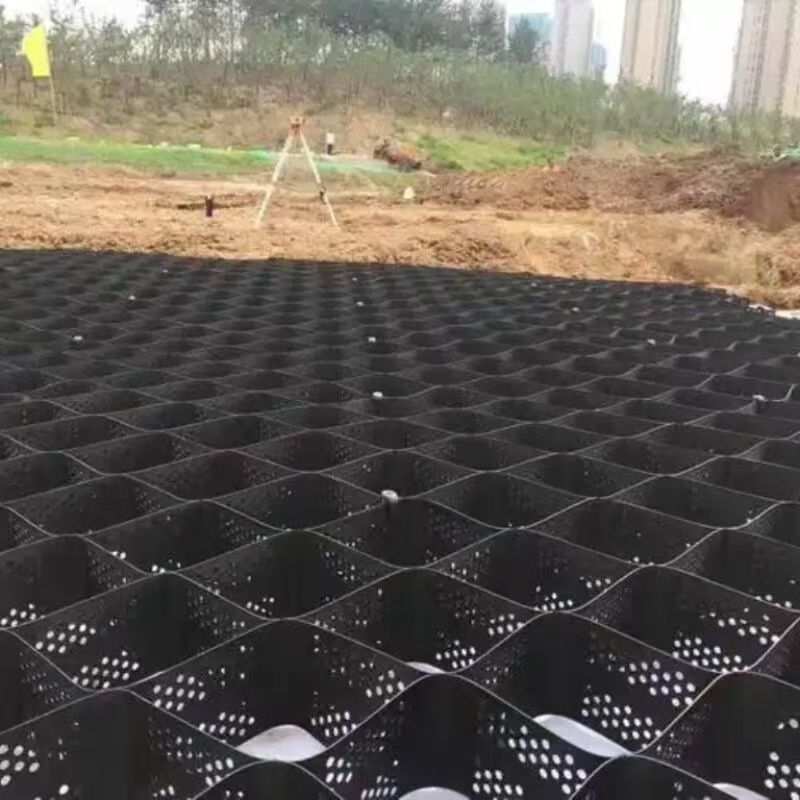
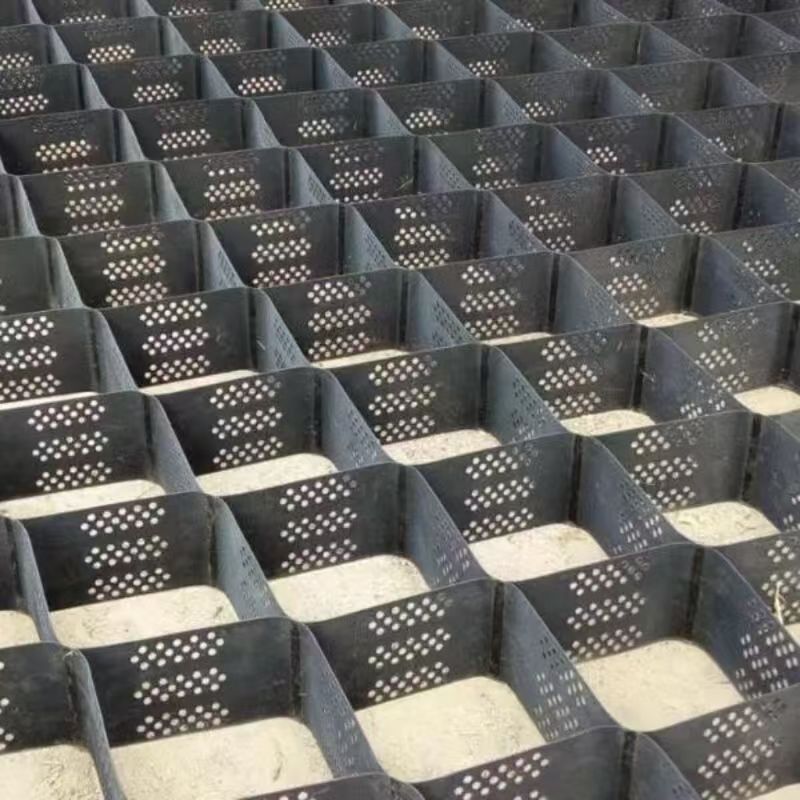
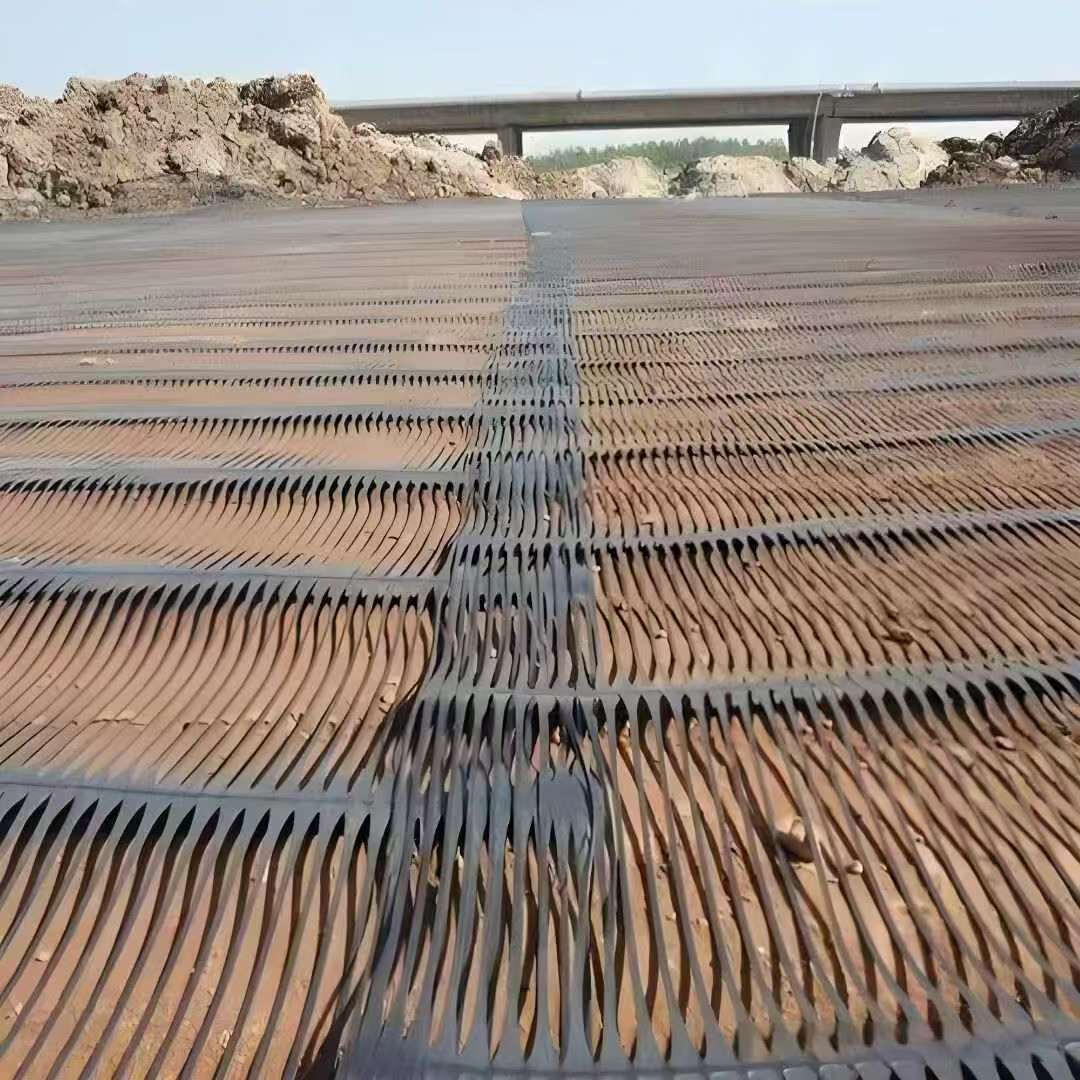
However, their reinforcement mechanisms are different. Plastic geocell uses a three-dimensional honeycomb structure to confine infill materials, while geogrid uses a planar grid structure to reinforce soil through interlocking, confinement, and tensile resistance.
The main characteristics of geocell:
1. Three-dimensional confinement: Restricts the lateral movement of soil and aggregate, improving the stability of the reinforced layer.
2. Flexible expansion: Panels can be folded during transportation and expanded into the required dimensions during installation.
3. Adaptability to different infill materials: Depending on the design, geocells can be filled with soil, sand, gravel, crushed stone, or concrete.
4. Environmental resistance: Polymer materials offer resistance to chemical corrosion, acids, and alkalis, with aging performance depending on the material formulation and exposure conditions.
5. Adjustable geometry: Geocell height, welding distance, and other structural dimensions can be selected to meet engineering requirements.
The main characteristics of geogrid:
1. Tensile reinforcement: Provides tensile resistance to improve the stability of reinforced soil structures.
2. Mechanical interlocking: Geogrid openings allow surrounding aggregate or soil particles to interact with the reinforcement.
3. Improved load transfer: distributes applied forces within reinforced soil layers.
4. Reduced lateral deformation: Restricts soil movement through reinforcement and particle interaction.
5. Retaining wall reinforcement: Can be installed in multiple layers to reinforce retaining wall backfill.
1. Structural Configuration
Geocell features a three-dimensional honeycomb structure. Once expanded, it creates interconnected cells with vertical walls that surround the filling materials.
Geogrid features an open planar grid structure consisting of interconnected ribs and apertures. It is normally installed horizontally or at designed angles within soil structures.
2. Reinforcement Mechanism
Geocell primarily works through lateral confinement. Its cell walls restrict the movement of infill materials and maintain the integrity of the reinforced layer.
Geogrid primarily works through tensile reinforcement and mechanical interlocking. The geogrid interacts with surrounding soil or aggregate to resist deformation and improve the performance of the reinforced structure.
3. Load Transfer and Soil Behavior
Geocell creates a confined layer that can distribute loads across adjacent cells and improve the stability of loose granular materials. Its vertical cell walls also contribute to the stiffness of the reinforced layer.
Geogrid transfers tensile forces through its interaction with surrounding soil or aggregate. Its performance is influenced by tensile strength, aperture dimensions, rib geometry, anchorage, and soil properties.
4. Installation and Construction Methods
Geocell installation generally involves:
Geogrid installation generally involves:
The main applications of geogrid:
The main applications of geocell:
Q1: Can geocell replace geogrid in road construction?
Not in every situation. Geocell provides lateral confinement, whereas geogrid provides tensile reinforcement. The appropriate material depends on the road design, soil conditions, and engineering requirements.
Q2: What is the main difference between plastic geocell and geogrid?
Geocell is a three-dimensional honeycomb confinement system that restricts the lateral movement of infill materials. Geogrid is a planar reinforcement material that improves soil stability through tensile resistance and mechanical interaction with surrounding particles.
Q3: Can geogrid be used for retaining wall construction?
Yes. Geogrid is commonly used in reinforced soil retaining walls. Multiple layers of geogrid are installed within the backfill to provide tensile reinforcement and improve the stability of the retaining structure.
leave a message
Scan to Wechat/Whatsapp :



 English
 Français
 Deutsch
 Русский
 Español
 Português
 عربي
 Tiếng Việt
 Indonesia
 हिन्दी




 IPv6 network supported