
leave a message
If you are interested in our products and want to know more details,please leave a message here,we will reply you as soon as we can.

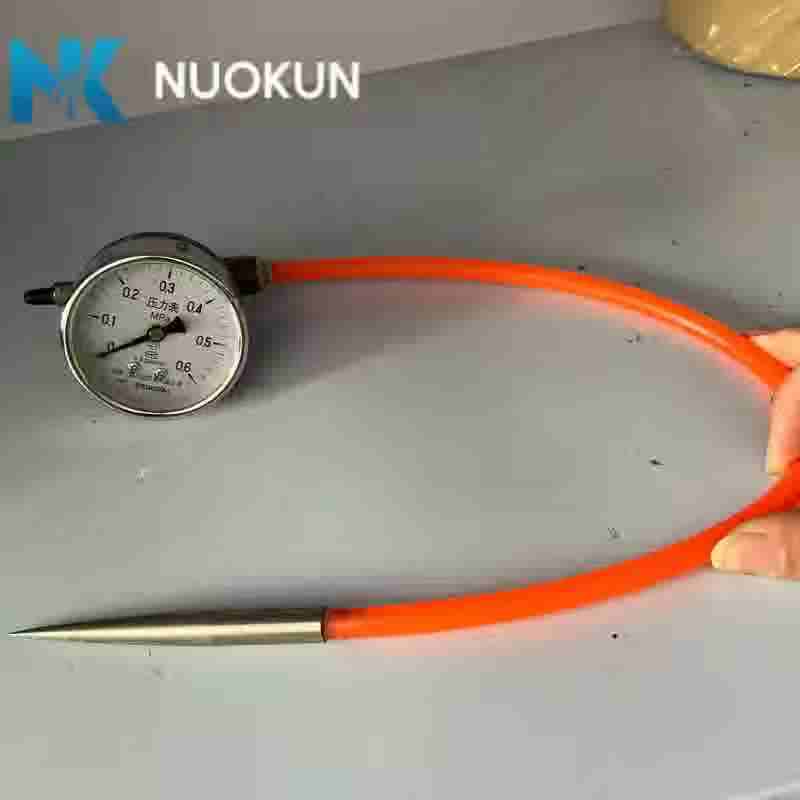
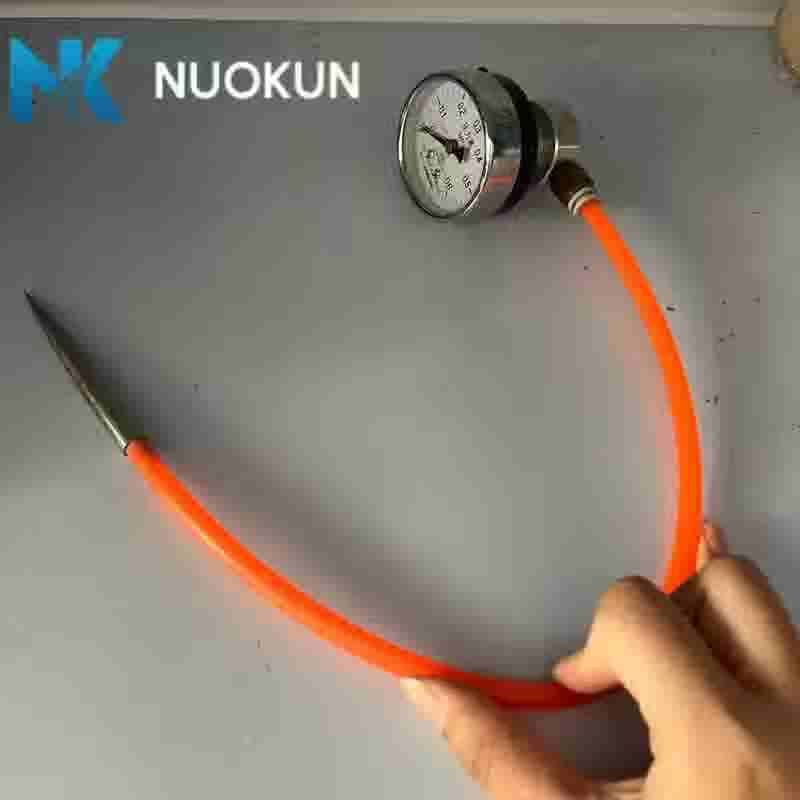
220V Geomembrane Pressure Detector | Geomembrane Weld Seam Air Pressure Testing Needle
A geomembrane weld seam air pressure tester is a specialized testing accessory used to check the integrity of double-track fusion-welded seams in HDPE and other thermoplastic geomembranes. It is commonly used together with an air pressure testing pump, pressure gauge, and connecting hose. During testing, the needle is inserted into the air channel formed between two parallel weld tracks. Then, compressed air is introduced into the channel to create a specified test pressure. By monitoring pressure changes over a specified period, inspectors can identify potential leakage paths, incomplete welds, or defects in the seam.
Color :
Black, OrangeWeight :
3kgLead Time :
7-14 days after deposit paymentPayment :
FOB (Can communicate and negotiate)Product Origin :
ChinaShipping Port :
Qingdao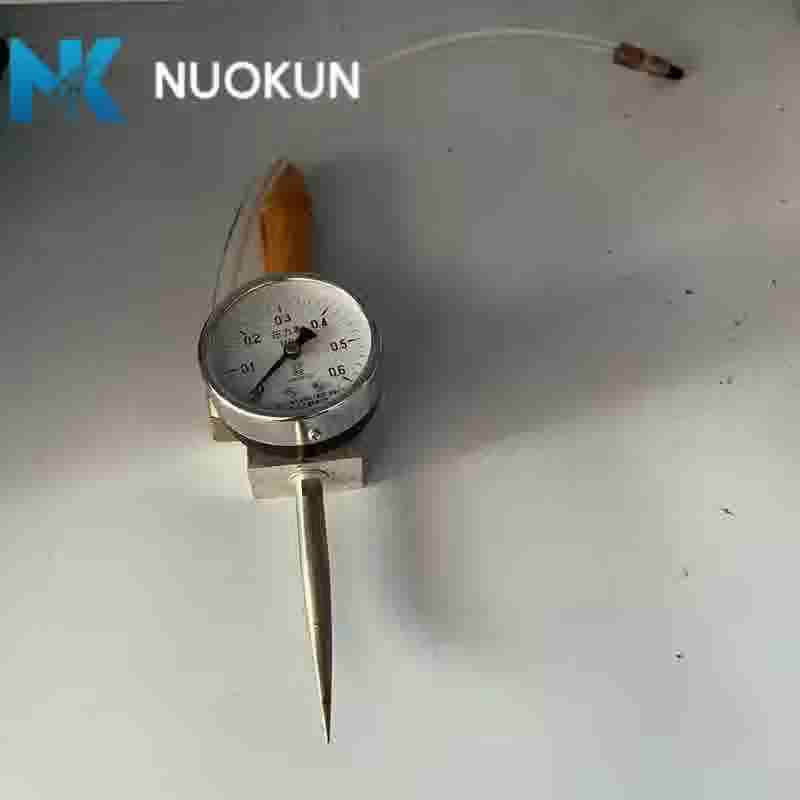
Geomembrane Pressure Detector
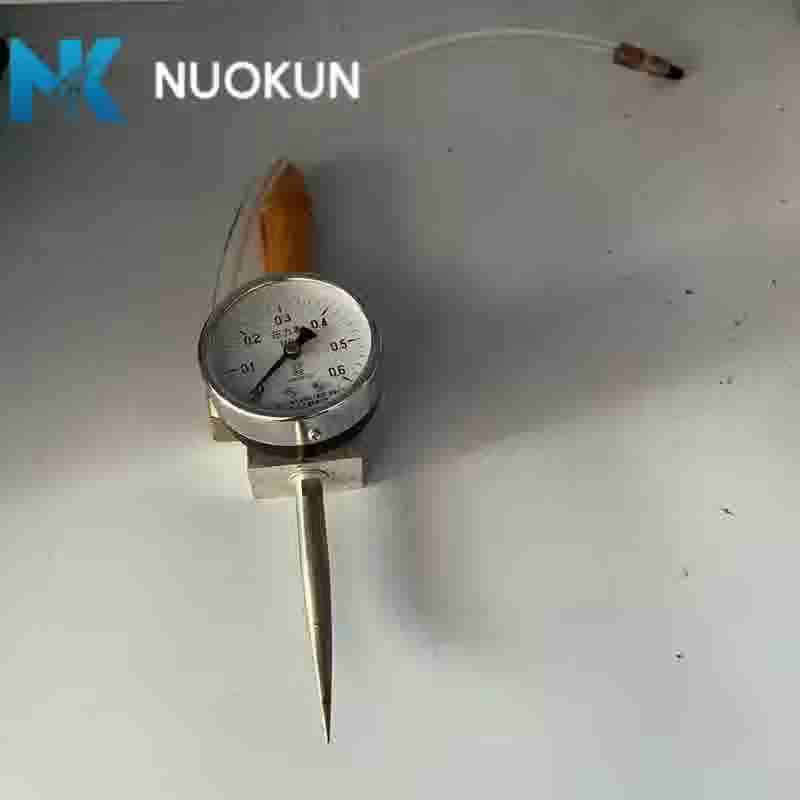
The Geomembrane Weld Seam Air Pressure Testing Needle is a specialized inspection tool to test the airtightness of double-track hot wedge welded seams in HDPE geomembranes.
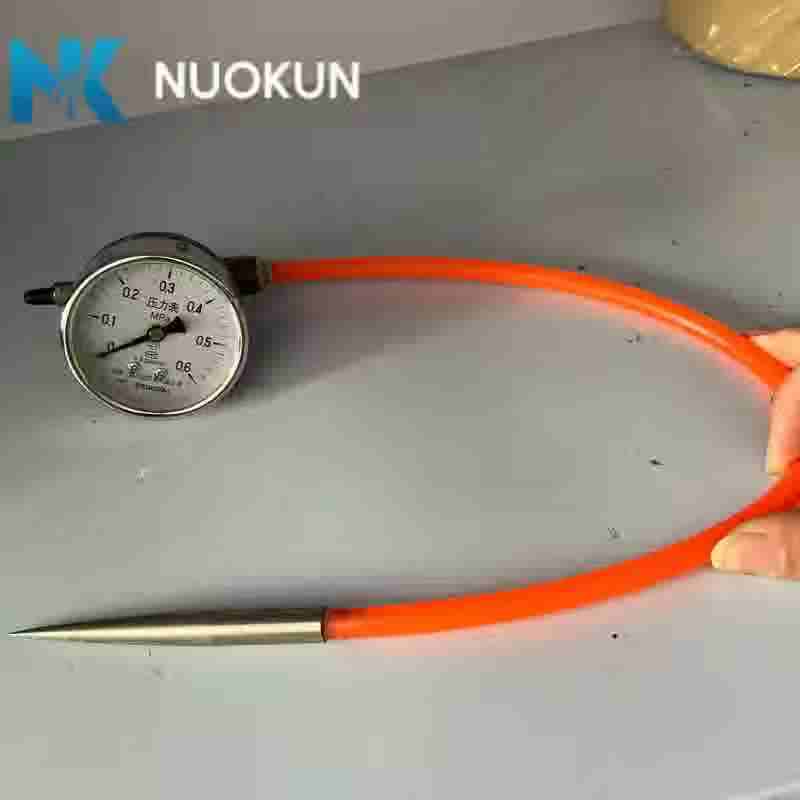
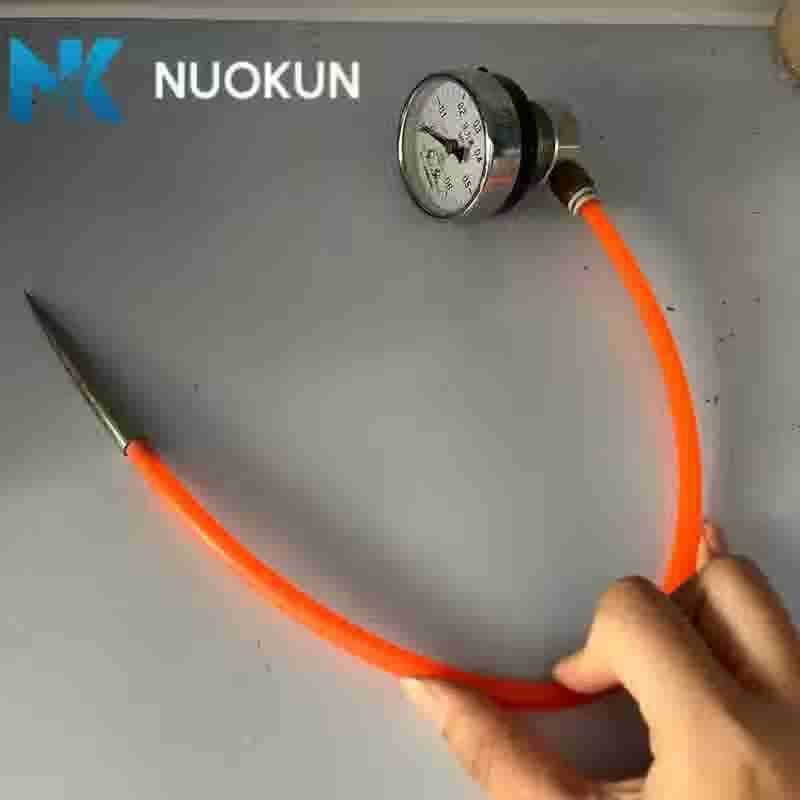
It features a stainless steel needle that connects to the enclosed air channel between two parallel welding tracks. When connected to an air pump and pressure gauge, compressed air is injected into the channel to evaluate whether the welded seam maintains the required pressure.
It is widely used in geomembrane installation projects, including water storage ponds, landfills, wastewater treatment ponds, and mining containment facilities. It helps construction teams identify potential air leakage points and improve welding quality control.
The air pressure testing needle is mainly used for non-destructive testing of double-track fusion-welded geomembrane seams.
1. Landfill lining projects
Used to inspect double-track welded seams in HDPE geomembrane liners installed in municipal solid waste landfills, hazardous waste facilities, and landfill caps.
2. Mining and tailings storage facilities
Inspect geomembrane seams in heap leach pads, tailings ponds, process water ponds, and other containment structures where leakage prevention is critical.
3. Reservoirs and artificial lakes
Used during the installation of geomembrane liners in agricultural reservoirs, irrigation ponds, aquaculture ponds, and artificial lakes.
4. Wastewater treatment facilities
To verify the integrity of geomembrane seams in wastewater storage ponds, treatment lagoons, and industrial containment areas.
5. Industrial waterproofing and containment projects
Suitable for applicable geomembrane lining systems where double-track fusion welding and an enclosed test channel are used.
| Item | Value |
| Range | 0-0.6MPa |
| Voltage | 220V |
| Power | 50W |
| Weight | 3kg |
The testing principle is straightforward: compressed air is introduced into the enclosed channel between two parallel weld tracks, and pressure changes are monitored to evaluate seam integrity.
Step 1: Insert the needle
Carefully insert the stainless steel testing needle into the air channel between the two parallel weld tracks.
Step 2: Connect the air pump
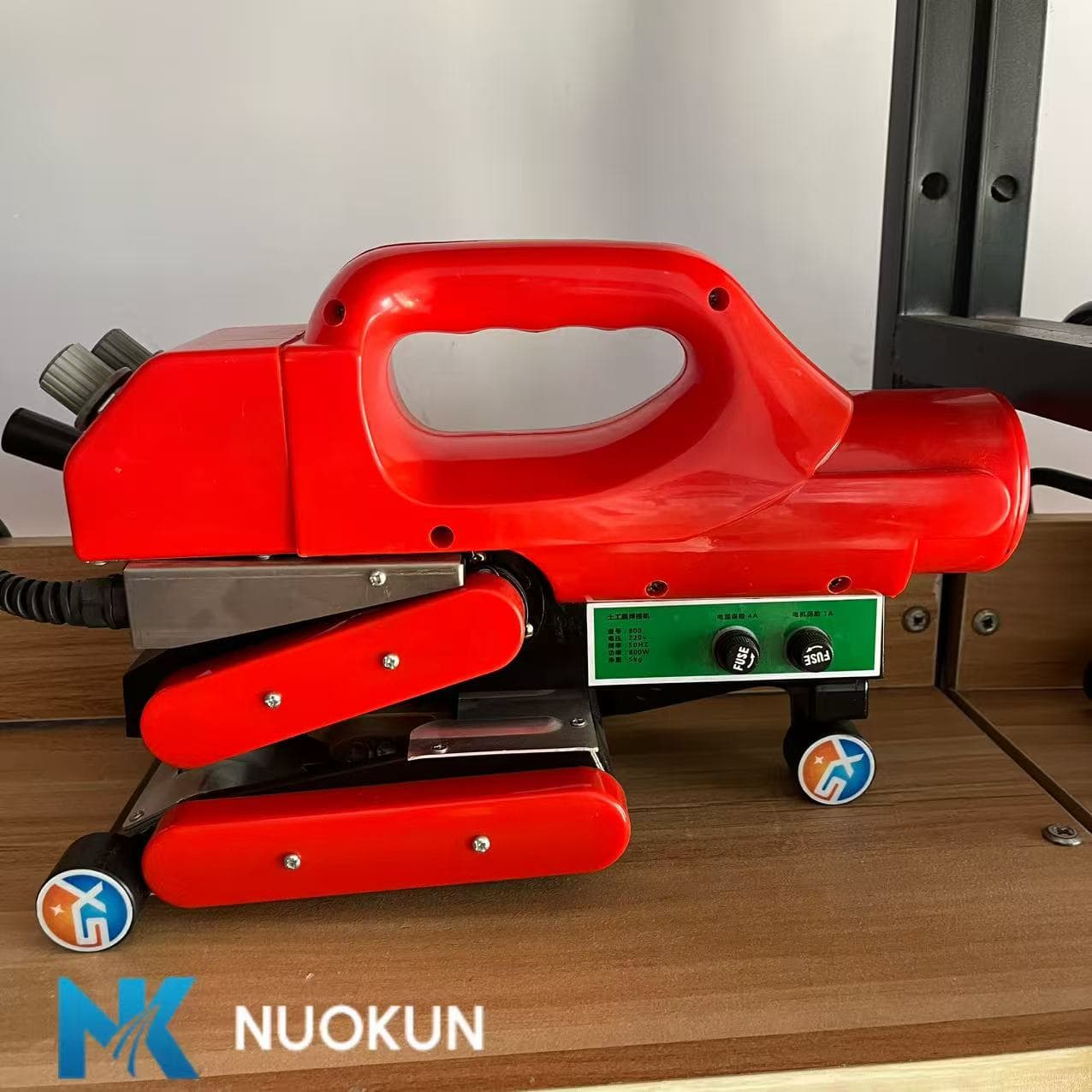
Connect the needle to an air pump and pressure gauge using a suitable hose and fittings.
Step 3: Inject compressed air
Pump air into the enclosed channel until the specified test pressure is reached. A pressure of approximately 25 kPa may be used in some project procedures, subject to the applicable testing requirements.
Step 4: Stabilize and monitor
Allow the pressure to stabilize, then monitor the pressure gauge for the specified holding period. A five-minute observation period may be used when required by the project procedure.
Step 5: Evaluate the result
Q1: What is a geomembrane air pressure testing needle used for?
It is used to introduce compressed air into the enclosed channel between two parallel fusion-welded tracks. The pressure change is monitored to evaluate the integrity of the tested seam section.
Q2: Can the testing needle be used for all geomembrane welds?
No. It is mainly designed for double-track fusion-welded seams with an enclosed air channel. Single-track extrusion welds generally require other suitable inspection methods.
Q3: Is air pressure testing destructive?
The pressure test itself is non-destructive. However, inserting the needle creates a small puncture in the geomembrane. This point must be properly repaired and inspected after testing.
Q4: What does a pressure drop indicate?
A pressure drop may indicate leakage in the weld channel, but it can also result from loose fittings, an improperly sealed needle insertion point, temperature changes, or faulty equipment. The cause should be checked before making a final judgment.
Q5: Is an air pressure testing needle the same as an air pressure testing pump?
No. The needle is the component used to access the enclosed test channel. The pump supplies compressed air, while the pressure gauge measures the channel pressure. These components work together as a testing system.
leave a message
Scan to Wechat/Whatsapp :



 English
 Français
 Deutsch
 Русский
 Español
 Português
 عربي
 Tiếng Việt
 Indonesia
 हिन्दी




 IPv6 network supported