
leave a message
If you are interested in our products and want to know more details,please leave a message here,we will reply you as soon as we can.
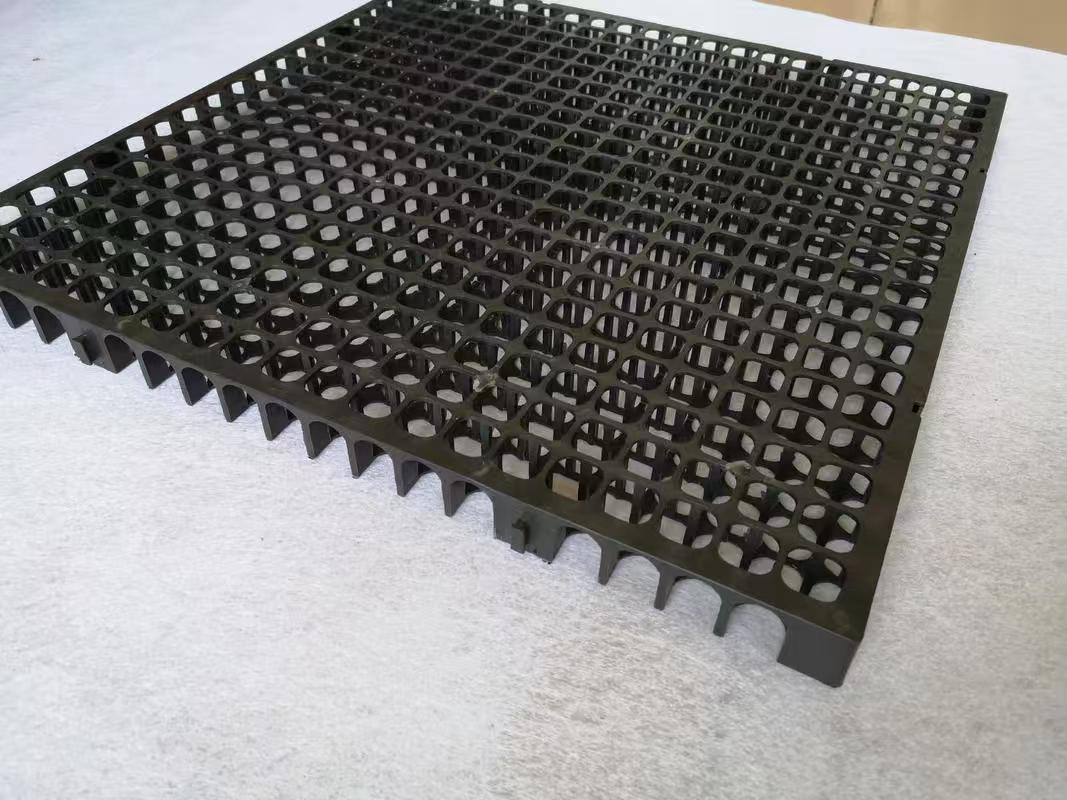
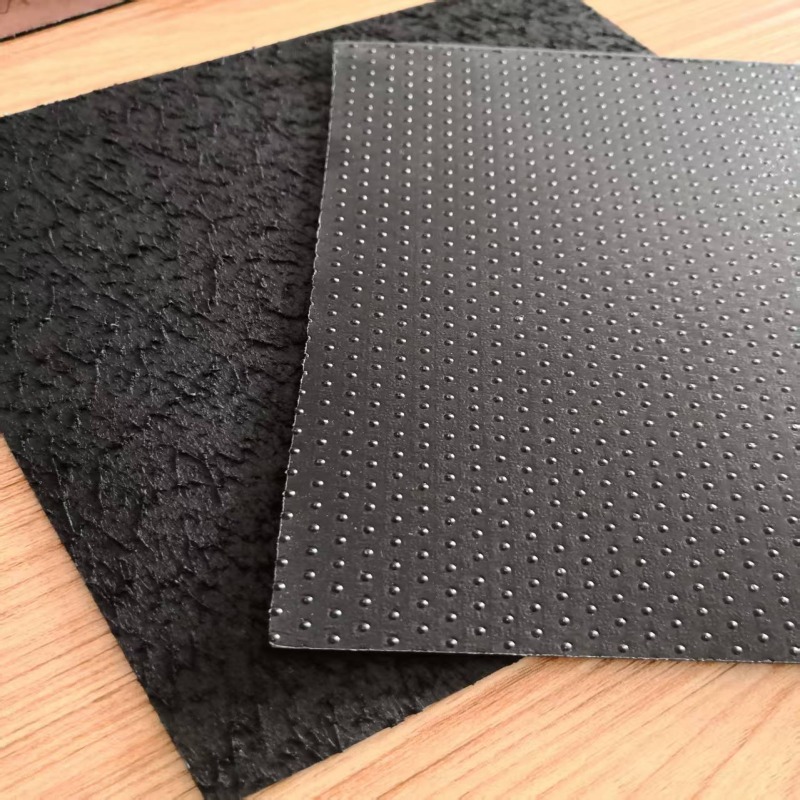
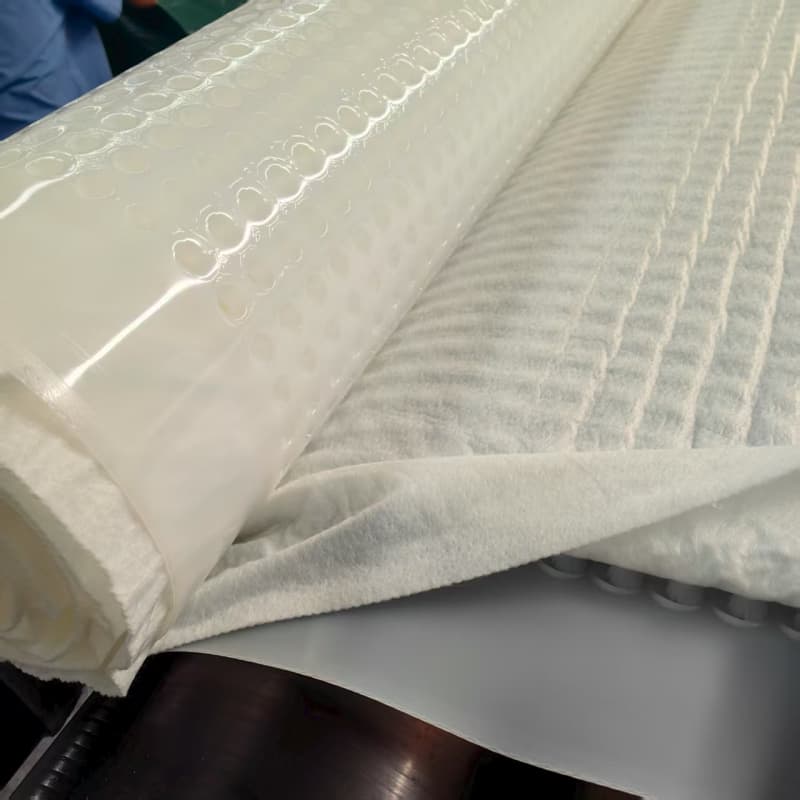
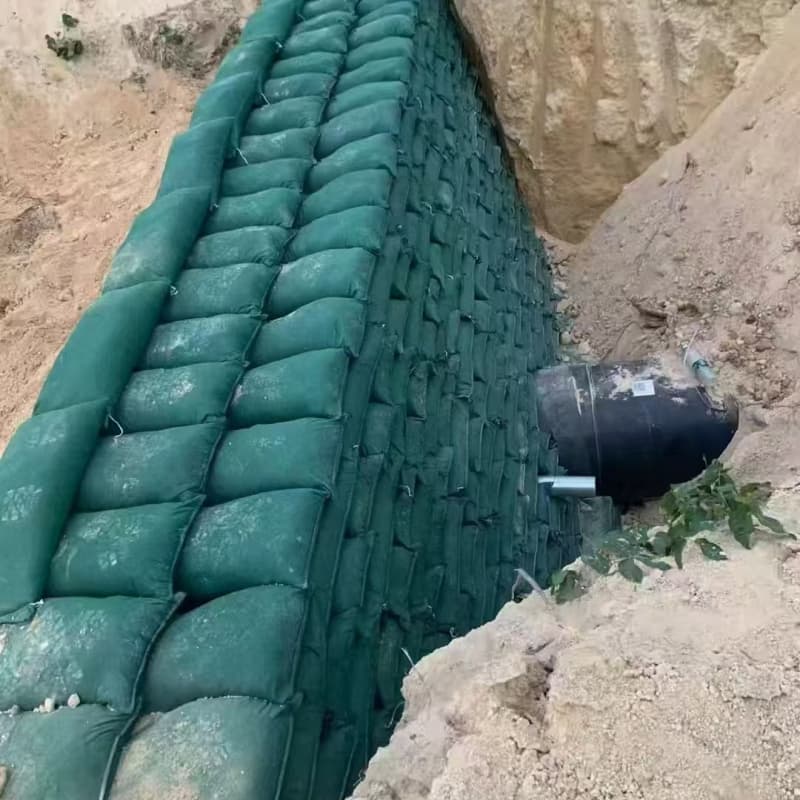
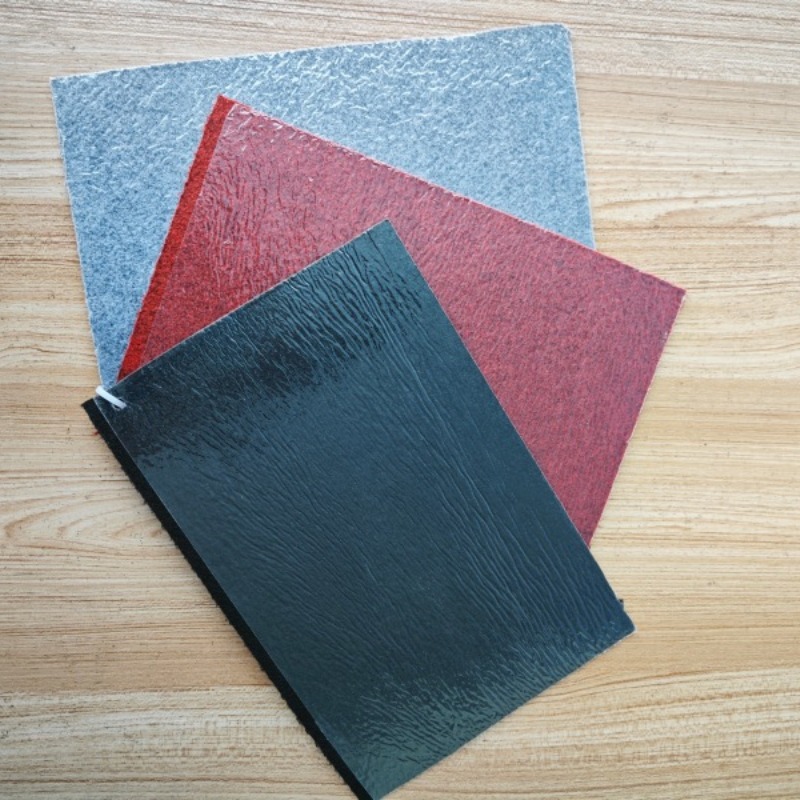
Drainage board for retaining walls is installed behind a wall to collect and convey water toward a drainage pipe or designated outlet. Common options include cuspated plastic drainage boards, geocomposite drainage boards, and three-dimensional geonet drainage composites. Their structures differ, so the right choice depends on the wall design, backfill conditions and drainage requirements.
Cuspated or composite drainage boards may be suitable options for conventional retaining walls and basement walls. For projects requiring greater in-plane flow capacity under load, a three-dimensional geonet composite can also be evaluated.
The main function of a drainage board is to provide a path for water behind the wall and convey it toward the drainage system. It does not replace structural wall design or a properly designed drainage outlet. If the outlet is blocked or the drainage layer is not properly connected to the pipe, the system may not perform as intended.
| Item | Parameter |
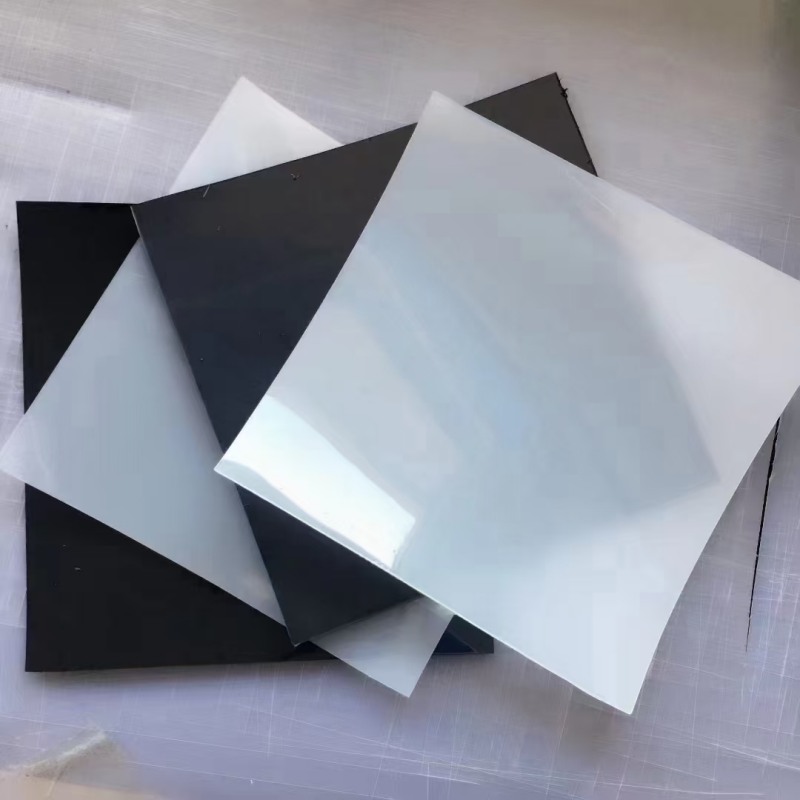
| Material | High-Density Polyethylene, Polyvinyl Chloride, Polypropylene |
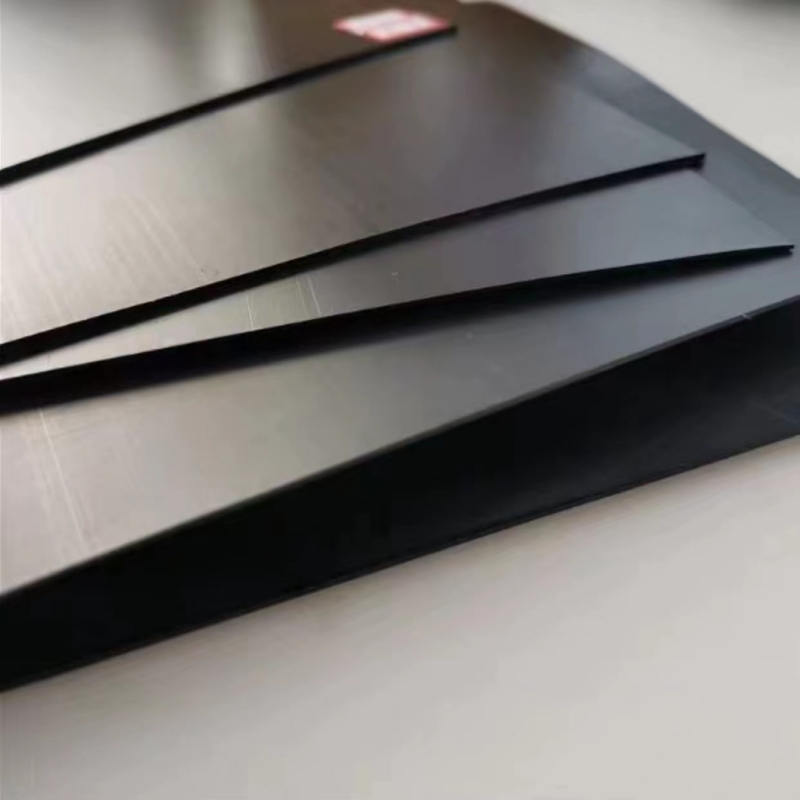
| Thickness | 1.5-1.8mm |
| Height | 0.8cm, 1.2cm, 1.6cm, 2.0cm, 2.5cm, 3.0cm |
| Compressive Strength | ≥150kpa |
| Testing Indicator | JC/T2112-2012 |
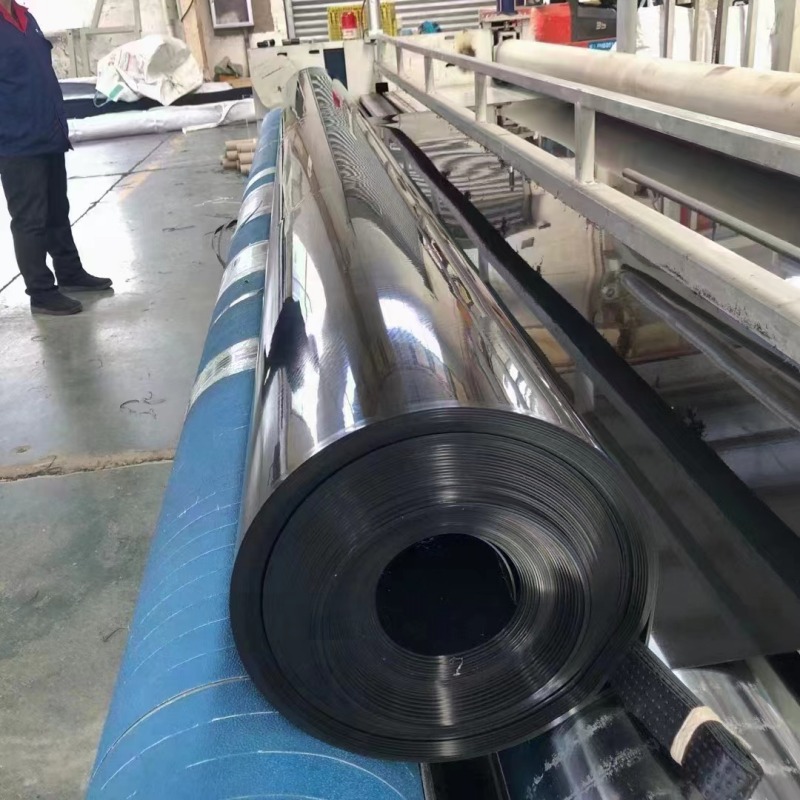
| Width | 1-3 meters (customizable) |
1. HDPE (High-Density Polyethylene)
HDPE offers good resistance to aging and chemical corrosion, making it suitable for drainage systems designed for long-term service. Under appropriate material, installation and operating conditions, some HDPE drainage systems may achieve a service life of around 50 years. The actual lifespan should be confirmed using product indicator and project requirements.
Applications: Retaining walls, basement exterior walls and other civil engineering projects requiring long-term drainage performance.
2. PVC (Polyvinyl Chloride)
PVC drainage products provides high stiffness and structural strength. Some products also offer good root resistance, although performance depends on the formulation, product structure and thickness.
Applications: Projects with specific requirements for stiffness, structural stability or root resistance, subject to verification against product specifications.
3. PP (Polypropylene)
PP offers useful chemical resistance, and some PP drainage products are relatively economical. However, weather resistance and long-term performance depend on the formulation, UV stabilization and exposure conditions. Products exposed to direct sunlight require particular attention to UV resistance.
Applications: Cost-sensitive drainage projects where the selected product meets the design and site requirements.
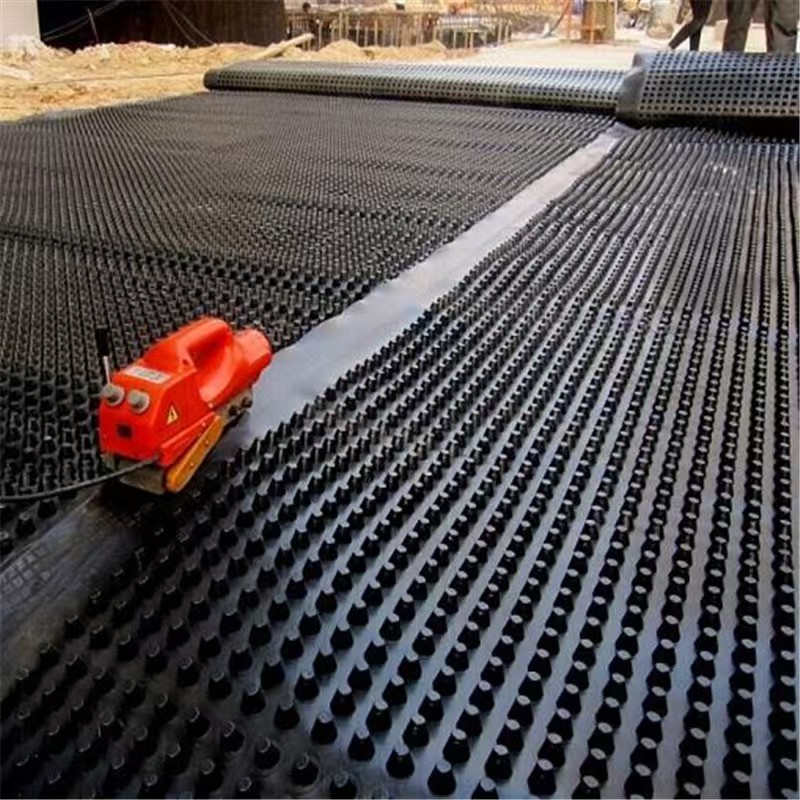
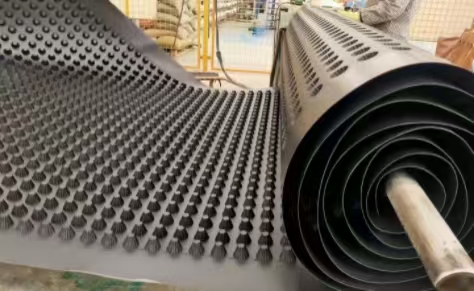
The Eastern Peripheral Expressway includes retaining structures, bridge abutments and other highway infrastructure. During the monsoon season, water can accumulate behind retaining walls and increase hydrostatic pressure. Therefore, a reliable retaining wall drainage system was required. According to project requirements, the project used drainage geocomposite across an area of 50,000 m².
Traditional retaining wall drainage systems often use gravel layers or porous concrete blocks. Gravel requires appropriate grading to suit the backfill soil, while transporting and installing thick drainage layers can increase site workload. These challenges are particularly relevant in confined areas behind bridge abutments. Finally, the project adopted a drainage geocomposite. Its drainage core conveys water, while the filter layer helps limit soil particles entering the drainage channels. The material can be cut to fit site dimensions and connected to drainage facilities at the base of the wall.
The project information identifies ease of installation and cost advantages over traditional drainage solutions among the product’s benefits. The reported installed area was 50,000 m².
Q1: What Guarantees Do You Provide When Choosing Us?
Certificate: GB/T19001-2016/ISO9001.
Real-Time Updates: we provide regular updates on production progress and shipment status, along with photos and videos of the production and loading process, so you can stay informed about your order at every stage.
After-Sales Service: provide the required documents promptly, offer professional online engineering and technical support and so on.
Q2: Should I choose a cuspated drainage board or a three-dimensional geonet composite?
For conventional walls, a cuspated or composite drainage board that meets the design requirements may be suitable. For projects with higher demands on long-term flow capacity and performance under load, a three-dimensional geonet composite can be evaluated. The final choice should be based on project conditions.
Q3: Why is a drainage pipe still needed?
The drainage board collects and conveys water, while the pipe or outlet carries it away from the system. Without a reliable outlet, water may still accumulate behind or beneath the wall.
leave a message
Scan to Wechat/Whatsapp :



 English
 Français
 Deutsch
 Русский
 Español
 Português
 عربي
عربي Tiếng Việt
 Indonesia
 हिन्दी


 IPv6 network supported